

India’s $7.4 Billion AI Data Center Bet Signals a New Era of Tech Investment
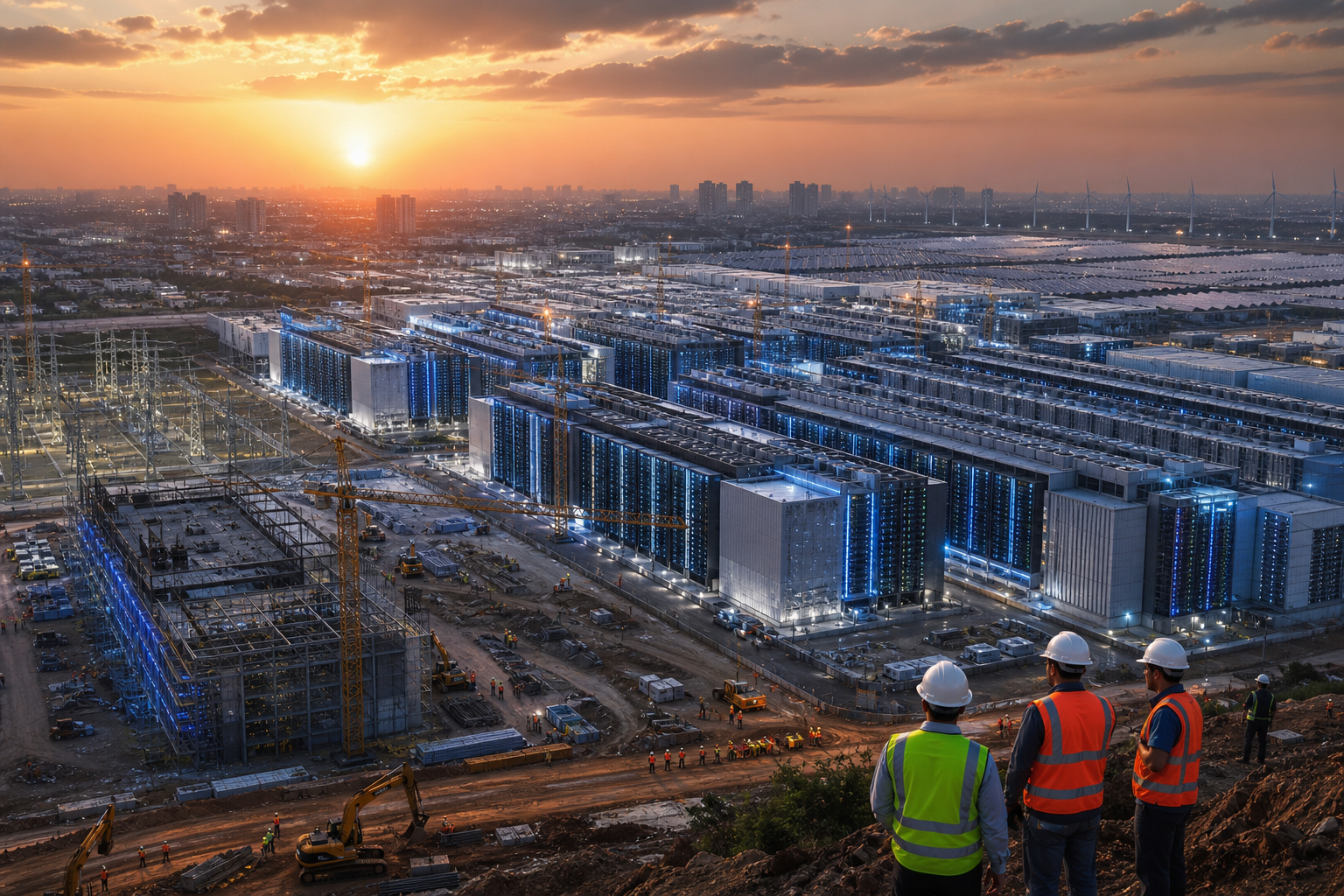
Tata Consultancy Services and its partners plan to invest up to $7.4 billion in an AI data center campus in Telangana, India, with capacity of up to one gigawatt. The project highlights growing investment in the physical infrastructure required to develop and operate advanced AI systems.
The campus could support activity across construction, energy, telecommunications and technology services while strengthening Telangana’s role as an AI infrastructure hub. It also raises concerns about energy consumption, water use and the long-term returns of large-scale data center investments.
India is making another major move in the global artificial intelligence race, with Tata Consultancy Services and its partners planning to invest up to $7.4 billion in a large AI data center campus in Telangana. The project reflects how the AI economy is increasingly moving beyond software and into massive physical infrastructure.
The planned campus is expected to reach up to one gigawatt of capacity, making it a significant investment in the computing power needed to train and operate advanced AI systems. The announcement shows that countries and companies are increasingly treating AI infrastructure as a strategic economic asset rather than simply a technology expense.

The scale of the investment is particularly significant because modern AI systems require enormous amounts of computing power, specialized hardware and reliable electricity. As demand for AI services continues to grow, data centers are becoming an essential part of the digital economy and a major destination for corporate investment.
From an economic perspective, projects of this size can create opportunities far beyond the technology companies operating the facilities. Construction, energy, telecommunications, equipment suppliers and specialized technology services can all benefit from the development of large computing campuses.

The investment also strengthens India’s position as an important destination for AI infrastructure. Hyderabad and the wider Telangana region already have a strong technology ecosystem, and large-scale computing projects could help attract additional companies that need access to advanced AI infrastructure.
However, the AI infrastructure race also raises important questions about energy consumption, water use and long-term returns. Building enormous data centers requires substantial resources, meaning governments and companies will need to balance rapid technological development with responsible infrastructure planning.

In my view, the most important part of this announcement is not simply the $7.4 billion price tag. It is the signal that the next stage of the AI economy will depend heavily on who can build, power and operate the infrastructure behind intelligent systems.
The global AI competition is therefore becoming much bigger than a race to create better models. It is becoming a race for computing capacity, energy, investment and digital infrastructure, and India’s latest move shows that the economic stakes are becoming increasingly difficult to ignore.