
Afghan Girls Face Another Year Without Education: A Generation at Risk
Millions of Afghan girls continue to face restrictions on their access to education, raising concerns about their future and the long-term development of Afghanistan.
According to UNICEF, more than one million girls have been directly affected by the ban on secondary education introduced in 2021. In January 2026, UNICEF and UNESCO said that 2.2 million adolescent girls were unable to attend secondary school because of the restrictions.
The continued exclusion of girls from education is not only affecting their individual opportunities but is also creating serious challenges for Afghanistan’s future workforce. UNICEF’s latest analysis warns that restrictions on girls’ education and women’s employment could result in the loss of up to 20,000 women teachers and 5,400 female healthcare workers by 2030.
The economic consequences are also significant. UNICEF estimates that restrictions on women’s education and participation in the labour force are already costing Afghanistan at least US$84 million every year in lost economic output. The organization warns that these losses could increase if the restrictions continue.
The education restrictions have also raised concerns about the country’s health and education systems. A declining number of trained female professionals could make it more difficult for women and children to access essential services, particularly in communities where women may have limited access to male healthcare workers.
Despite these challenges, Afghan families, teachers and students continue to seek alternative opportunities for learning. Community-based education and other forms of learning have provided some girls with opportunities to continue studying, although access remains limited. UNICEF has reported on community-based classes where girls continue their education up to the level available to them.
UNICEF and UNESCO have repeatedly called for Afghan girls and women to be allowed to return to secondary and higher education. They have emphasized that ensuring access to education is important not only for the rights and future of girls, but also for Afghanistan’s social and economic development.
As restrictions continue, the future of millions of Afghan girls remains uncertain. Education advocates and international organizations continue to stress that investing in girls’ education is essential for building a skilled workforce, strengthening communities and supporting Afghanistan’s long-term development.
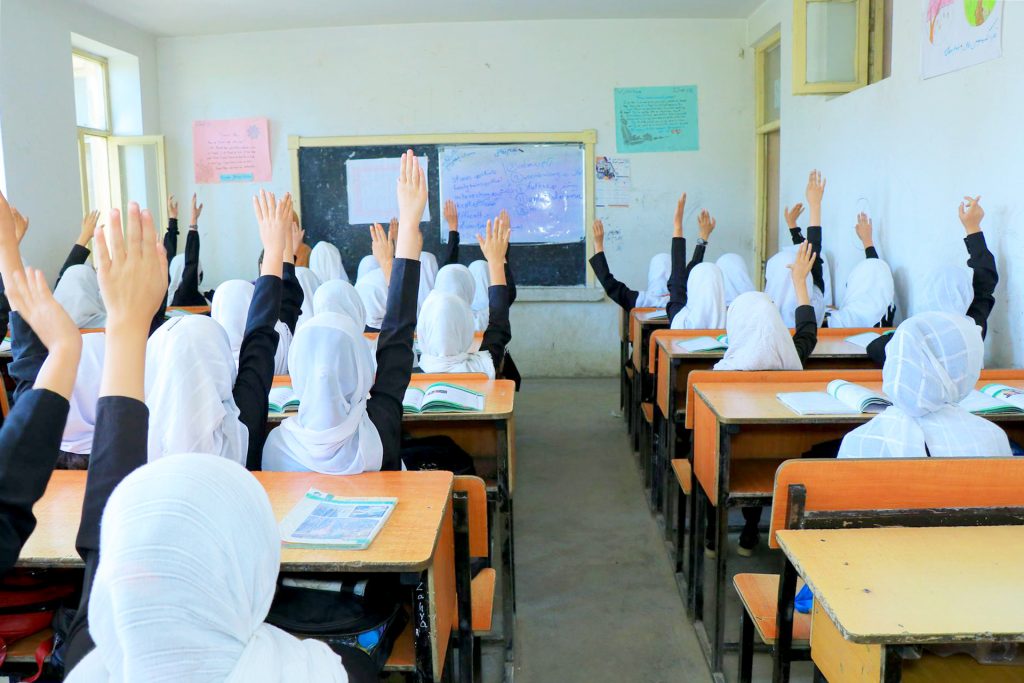
As restrictions continue, the future of millions of Afghan girls remains uncertain. Education advocates and international organizations continue to stress that investing in girls’ education is essential for building a skilled workforce, strengthening communities, and supporting Afghanistan’s long-term development.