
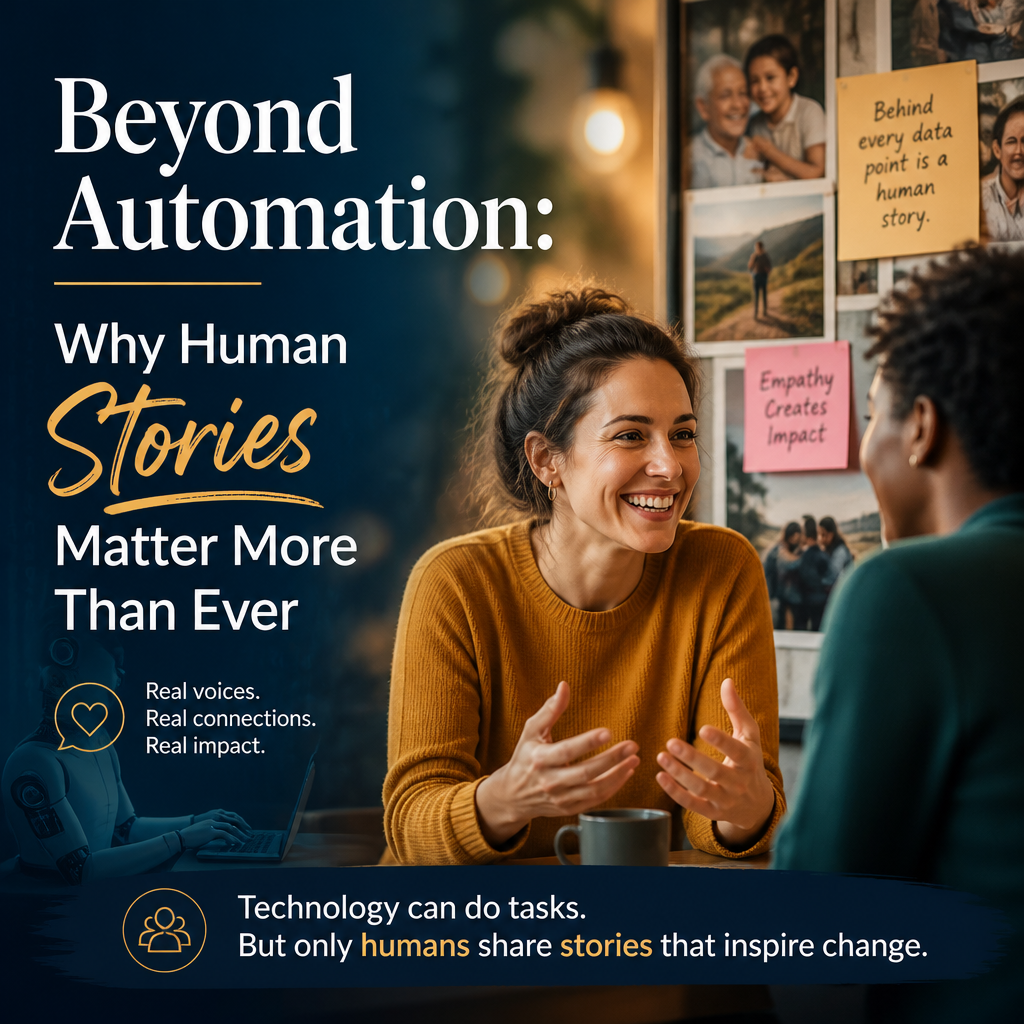
Beyond Automation: Why Human Stories Matter More Than Ever
Beyond Automation: Why Human Stories Matter More Than Ever
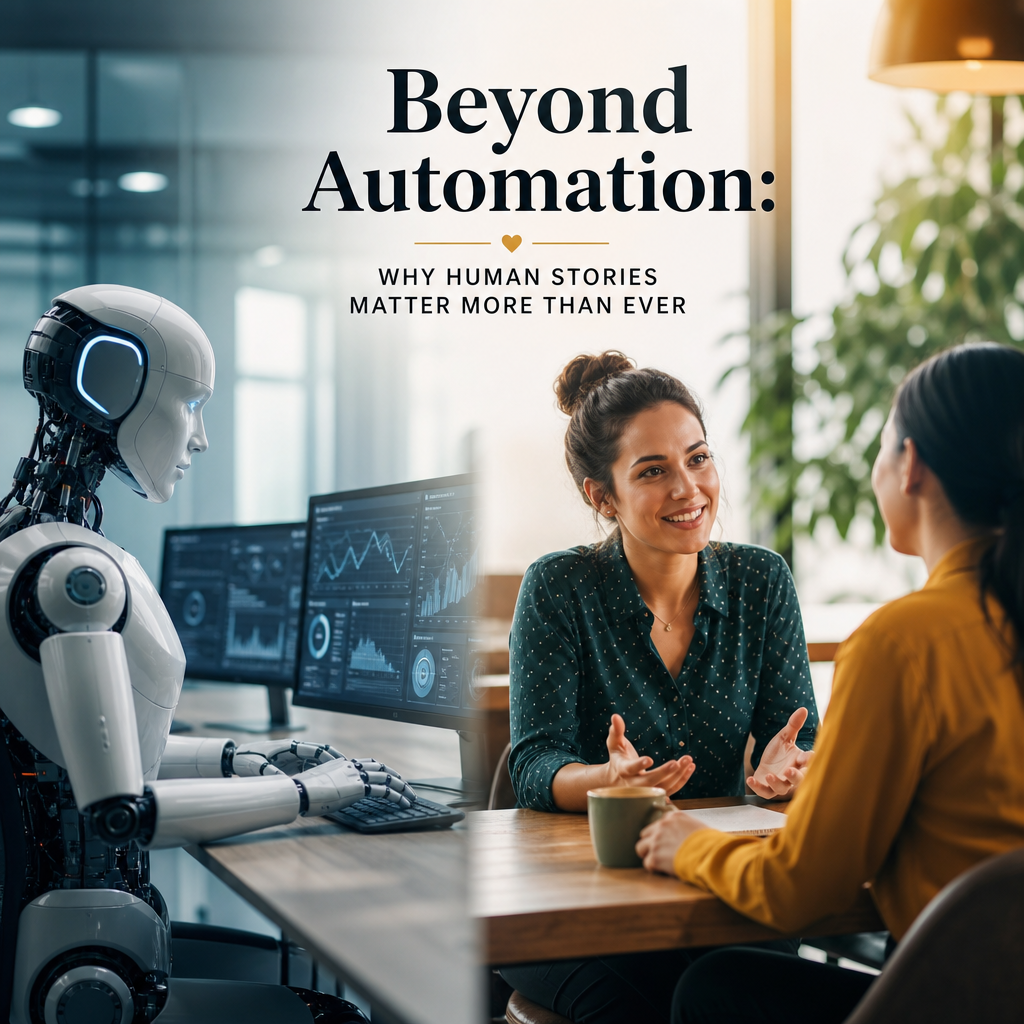
Automation is changing how we work, shop, communicate, and make decisions. Algorithms recommend what we watch, chatbots answer questions, and artificial intelligence can generate everything from reports to marketing campaigns in seconds.
These tools bring undeniable benefits. They save time, reduce repetitive work, and help organizations serve people at greater scale. Yet as technology becomes more capable, one thing becomes increasingly valuable: the human story.
Beyond automation, people still want meaning, connection, and evidence that someone understands their experiences. Facts may inform us, but stories help us care.
Technology Can Deliver Information, but Not Always Meaning
Automated systems are excellent at processing information. They can identify patterns, summarize large amounts of data, and produce accurate responses. However, information alone does not explain why something matters.
Consider a nonprofit sharing statistics about hunger. A chart may show how many families need assistance, but a personal account can reveal what those numbers feel like in daily life. A parent choosing between groceries and medicine gives emotional context that data cannot provide on its own.
Human stories transform abstract issues into recognizable experiences. They help audiences see themselves, their families, or their communities in situations that might otherwise feel distant.
Authenticity Builds Trust
People are becoming more aware of automated content. They can often recognize when an email, advertisement, or social media post feels generic. Even polished writing can lose its impact when it lacks a genuine point of view.
Authentic stories create trust because they show real perspectives, challenges, and choices. They do not need to be dramatic to be meaningful. A customer describing how a service solved a small but important problem can be more persuasive than a long list of features.
For organizations, authenticity means:
- Sharing real experiences rather than exaggerated claims
- Including specific details that make stories believable
- Allowing different voices to speak in their own words
- Acknowledging difficulties instead of presenting perfection
- Connecting personal experiences to broader values
The goal is not to manufacture emotion. It is to communicate with honesty.
Stories Make Brands More Memorable
In crowded markets, products and services can appear remarkably similar. Many companies promise quality, convenience, innovation, or affordability. These claims may be important, but they are rarely memorable by themselves.
Stories give those promises a human shape. A small business owner explaining why they began can make a brand feel distinct. An employee describing the care behind a product can make its quality easier to understand. A customer sharing a transformation can show value more clearly than a technical description.
Memorable stories usually include three elements:
- A relatable person or perspective
- A meaningful challenge or desire
- A change, discovery, or outcome
This structure does not require a dramatic success story. Everyday progress can be just as powerful when it reflects something the audience understands.
Human Stories Encourage Empathy
Automation can personalize content, but personalization is not the same as empathy. A system may know what someone clicked, purchased, or searched for. It does not necessarily understand what that person fears, hopes for, or values.
Stories invite us to look beyond our own experiences. They can introduce unfamiliar perspectives and encourage thoughtful responses to complex issues. In workplaces, personal stories can strengthen collaboration by helping colleagues understand the circumstances behind different viewpoints. In public conversations, they can replace stereotypes with nuance.
Empathy matters because people do not make decisions based on logic alone. They respond to identity, emotion, belonging, and trust. A well-told story creates space for those factors without abandoning facts.
Using Automation Without Losing the Human Voice
The answer is not to reject automation. Instead, technology should support human creativity and communication rather than replace them completely.
Organizations can use automated tools to research audiences, organize interviews, identify themes, and distribute content. But the heart of the story should come from real people and lived experiences. Interviews, observations, and personal reflection remain essential.
Before publishing a story, ask:
- Who is speaking?
- What makes this experience specific?
- What tension or challenge does it reveal?
- Why should the audience care?
- Does the story respect the person sharing it?
These questions help ensure that technology improves the process without flattening the human perspective.
The Future Will Need More Humanity
As automated content becomes easier to produce, genuine human insight will become more distinctive. The most effective communication will combine technological efficiency with emotional intelligence.
People will continue to value speed and convenience, but they will also search for something machines cannot fully provide: recognition. They want to feel seen, understood, and connected to something real.
That is why human stories matter more than ever. They remind us that behind every dataset, transaction, and digital interaction is a person with a history, a struggle, and a reason to care. Beyond automation, those stories remain the foundation of meaningful communication.