
Uncovering Ancient Ariana: How It Shaped Central Asia’s Trade Routes
Uncovering Ancient Ariana: How the Cradle of Civilization Shaped Central Asia’s Trade Routes
Ancient Ariana — a loosely defined region spanning parts of modern Iran, Afghanistan, and surrounding highlands — has long been described as a cradle of civilization. Far from an isolated backwater, Ariana sat at the crossroads of empires and ecosystems. Its rugged mountains, fertile valleys, and strategic oases helped shape the trade arteries that would become the arteries of Central Asia for millennia.
Geography: corridors, oases, and mountain passes
Geography made Ariana a natural transit zone. To the north lay the Oxus (Amu Darya) basin and the vast steppes; to the south, the Persian Gulf and Iranian plateau. Between them the Hindu Kush and the Pamirs presented both barrier and gateway.

Key geographic features that directed movement included:
- Major rivers and fertile valleys (Helmand, Hari Rud) that supported settled agriculture and urban centers.
- Mountain passes (Paropamisus routes, the Khyber and Bolan corridors further east) that funneled caravans and armies.
- Desert margins and oasis towns that served as stopping points for long-distance trade.
These landscapes produced predictable choke points where merchants, armies, and ideas converged. Ariana’s environment thus became the stage on which long-distance commerce could reliably operate.

Political centers and commercial hubs
Ariana’s influence grew through the cities and polities it nurtured. Urban centers like Bactra (Balkh), Arachosia (Kandahar region), and smaller oasis towns functioned as commercial and administrative hubs. Empires — Achaemenid Persians, Alexander’s Hellenistic successors, Greco-Bactrian and Kushan states — all recognized Ariana’s logistical value and invested in roads, forts, and patronage of trade.
These states created conditions for trade by:

- Standardizing coinage and weights, which simplified transactions across regions.
- Securing routes with garrisons and treaties that reduced banditry.
- Patronizing caravan towns and markets where long-distance merchants could resupply.
Political continuity, even through regime change, helped maintain the flow of goods along emerging Silk Road corridors.
Caravan culture: goods, routes, and innovations
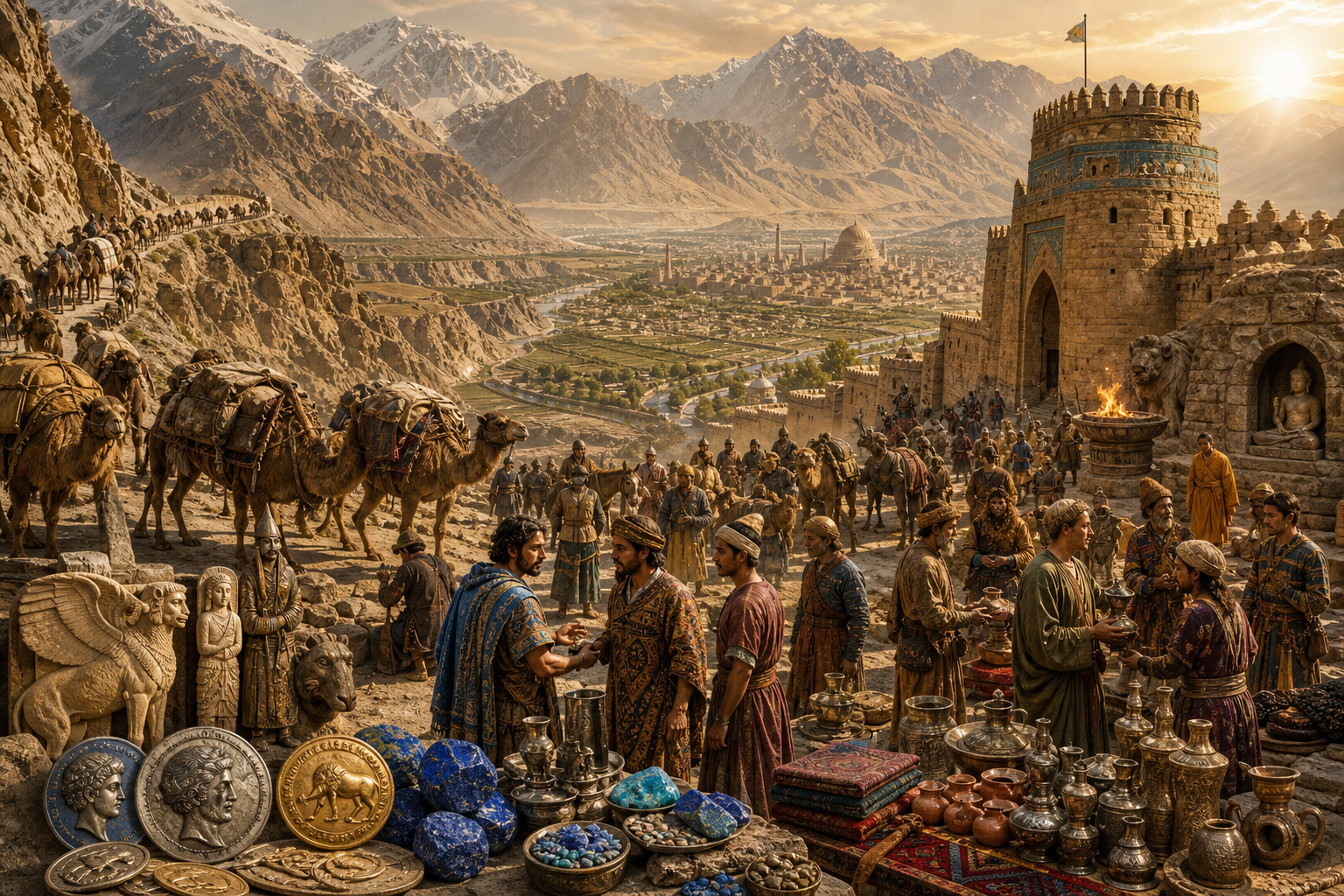
Caravans were the practical backbone of Ariana’s trade. Camel and mule trains carried goods between the Mediterranean worlds, South Asia, and East Asia. Typical traffic included:
- Lapis lazuli and turquoise from Afghan mines.
- Horses, especially famed breeds from eastern Iranian steppes.
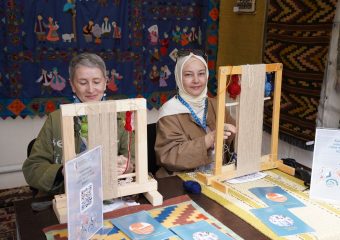
- Textiles, wool, and intricate woven goods.
- Spices, perfumes, and precious metals moving westward and eastward.
- Silk moving from China through Central Asian intermediaries.
Merchants relied on innovations such as specialized pack animals (Bactrian camel), caravanserais (roadside inns), and improved coinage. The rise of Sogdian merchants later centralized commercial networks; their language and business practices became a lingua franca for trans-regional trade.
Cultural and technological diffusion along trade lines
Trade did more than move goods — it carried religions, scripts, and technologies. Ariana’s corridors transmitted Buddhism and Zoroastrian practices, Hellenistic art forms, and later Islam. Architectural motifs, metallurgical techniques, and irrigation know-how spread as artisans and engineers traveled with caravans or accompanied imperial projects.
Notable cultural exchanges included:
- Greco-Bactrian artistic syncretism visible in sculpture and coin portraits.
- Spread of Buddhism from Gandhara through Central Asian temples and monastic networks.
- Dissemination of writing systems and administrative practices enabling long-distance governance.
These exchanges transformed local societies and stitched distant regions into a shared cultural and economic fabric.
Archaeological evidence and modern legacy
Archaeology continues to illuminate Ariana’s central role. Excavations at sites like Balkh, Begram, and the Bamiyan valley have revealed textiles, coins, and artworks that testify to extensive trade contacts. Lapis lazuli artifacts found in Mesopotamia and Egypt trace raw-material flows back to Afghan mines. Numismatic evidence shows coin circulation across broad swaths of Asia.
Today, the legacy of ancient Ariana persists in Central Asia’s place names, artisanal traditions, and the genetic and linguistic diversity of its peoples. Modern attempts to map the Silk Road increasingly emphasize these earlier routes and nodes, recognizing that Ariana’s ancient networks laid the groundwork for later transcontinental exchange.
Conclusion: why Ariana matters for understanding Central Asia’s trade
Uncovering ancient Ariana reframes how we see Central Asia’s economic history. Rather than a passive bridge, Ariana was an active crucible where geography, urbanism, and imperial policy combined to create resilient trade systems. These systems transported not only commodities but ideas and institutions that shaped civilizations from the Mediterranean to the Far East. Understanding Ariana’s role helps explain the long-term dynamics of connectivity that make Central Asia a crossroads of history.