
Tunnels, Missing Workers and Mounting Anger: Inside Nepal’s Flood Rescue Effort
Nepal Floods: Rescue Tunnel Drilling and Public Anger as Thousands Remain Missing
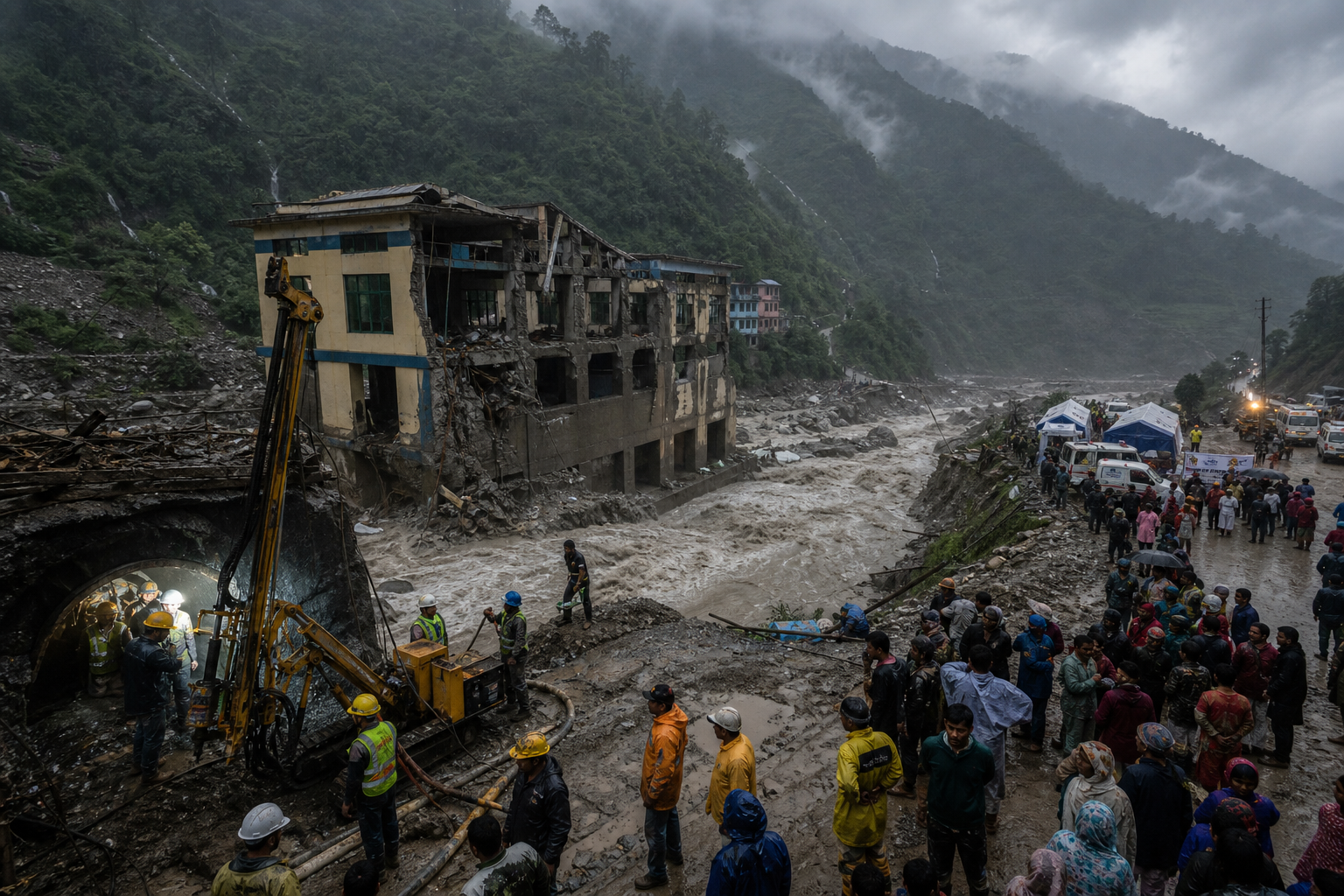
Reporting on August 29, 2026 from The New York Times and Al Jazeera put a grim spotlight on the scale of destruction after flash floods in Nepal. The New York Times reported continuing searches for roughly 2,400 people missing amid “immense” devastation, including rescue efforts that involved boring through hydropower tunnels to reach stranded workers. Al Jazeera’s coverage documented rising public anger over the government’s response. Together these reports form the factual basis for assessing immediate humanitarian needs and the longer-term infrastructure and governance questions the disaster exposes.
Confirmed facts from the reporting
The New York Times’ reporting on August 29 states that rescue crews were searching for about 2,400 people listed as missing, and that teams were attempting to bore through hydropower tunnels to reach roughly 900 workers trapped after the floods. Al Jazeera’s reporting, published the same day, documented public protests and anger directed at authorities over perceived failures in prevention and rescue.

These are factual claims reported by two major outlets on the same date; they establish the disaster’s human scale, the extraordinary nature of the rescue methods employed, and the emergence of domestic political backlash.
Humanitarian and operational picture
The combination of large numbers missing and the need to drill through buried tunnels underscores both the disaster’s ferocity and the logistical complexity of rescue operations. Hydropower tunnels where workers were trapped present unique rescue challenges: confined, flooded passages require specialized equipment, skilled personnel, and time—commodities in short supply during sudden-onset disasters. The New York Times’ account of tunnel-bore rescue attempts points to a scenario where traditional surface search-and-rescue teams must be complemented by engineering-driven interventions.

Humanitarian agencies, when operational on the ground, will prioritize immediate life-saving needs—medical triage, shelter, clean water and rapid assessment of where survivors may be reachable. The reported scale of missing persons also raises difficult questions about casualty accounting and the capacity of local authorities to register and support families seeking information.
Infrastructure vulnerability and economic fallout
Both outlets’ reporting highlights the link between the floods and the region’s hydropower infrastructure. Nepal’s hydropower projects are critical to domestic energy supply and export revenues; damage to tunnels, dams or transmission networks can have knock-on effects on electricity availability, reconstruction budgets and investor confidence.

Even before full damage assessments, the reported need to bore through tunnels implies structural disruptions that could delay hydropower operations for months or longer. The economic implications include lost generation, repair costs, and potential downstream impacts on industries and communities that depend on steady power.
Governance, accountability and public anger
Al Jazeera’s coverage documented public anger at the government’s response—an important political signal. Post-disaster scrutiny often centers on disaster preparedness, early-warning systems, land-use planning, and the enforcement of safety standards in large infrastructure projects. If public reporting about preventable failures gains traction, it could catalyze policy reviews or political pressure for resignations and reform.
The political response will likely hinge on transparent investigation results, timelines for relief, and visible steps to support affected families. The outlets’ parallel reporting of both rescue operations and protests shows how humanitarian emergencies quickly intersect with governance debates.
What further information is needed
The factual coverage so far leaves several verification tasks: independent tallies of missing and confirmed dead; technical assessments of hydropower damage; detailed maps of affected communities; and information on the coordination role played by Nepal’s central government, provincial authorities and international aid agencies. Local sources, official government updates and on-the-ground NGO situation reports will be essential to corroborate and expand the initial reporting.
Short- and medium-term priorities
In the short term the priorities are life-saving: accelerate tunnel-access engineering where feasible, expand medical capacity, and ensure families receive timely information. Medium-term priorities include independent infrastructure assessments, emergency financing for repairs, and transparent investigations into whether regulatory lapses contributed to the scale of the disaster.
Conclusion
Reporting by The New York Times and Al Jazeera on August 29, 2026 establishes a grave humanitarian emergency in Nepal with complex technical rescue needs and rising domestic political pressure. The combination of mass missing-person reports and engineering-intensive rescue methods highlights the stakes: lives remain at risk, infrastructure faces likely long delays, and political accountability questions are beginning to surface.