
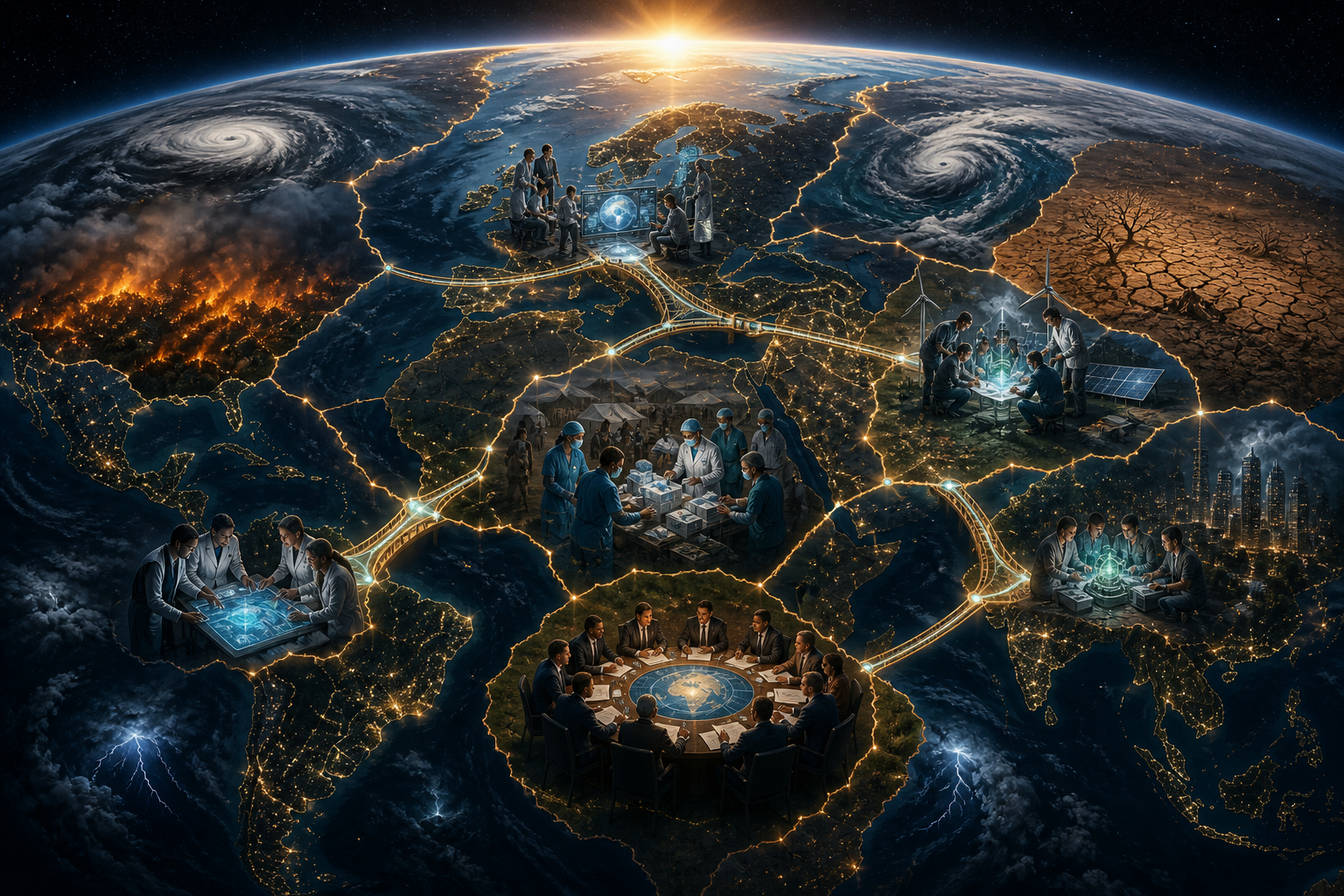
A Fragmenting World: Why Global Cooperation Matters More Than Ever
The world is entering a period of growing geopolitical tension, economic uncertainty and rapid technological change. At the same time, countries continue to face challenges that cannot be solved by one nation alone, including climate change, humanitarian crises, economic instability and global security.
The United Nations has warned that geopolitical tensions and global fragmentation are putting development progress under pressure. Its 2026 Financing for Sustainable Development Report emphasizes the need for stronger and more practical forms of international cooperation.

Despite growing divisions, international cooperation has not disappeared. Countries continue to work together on health, technology, climate action, development and humanitarian assistance. The United Nations’ Sustainable Development Goals also emphasize global partnerships as an essential part of achieving sustainable development.
The challenge now is to find practical forms of cooperation that can produce meaningful results even when countries disagree on broader political issues. Cooperation does not always require complete agreement; countries can still work together on specific problems where their interests overlap.

As global challenges become increasingly interconnected, international cooperation may be more difficult—but also more necessary—than ever. Building trust, maintaining dialogue and focusing on practical solutions could help countries navigate an increasingly divided world.