

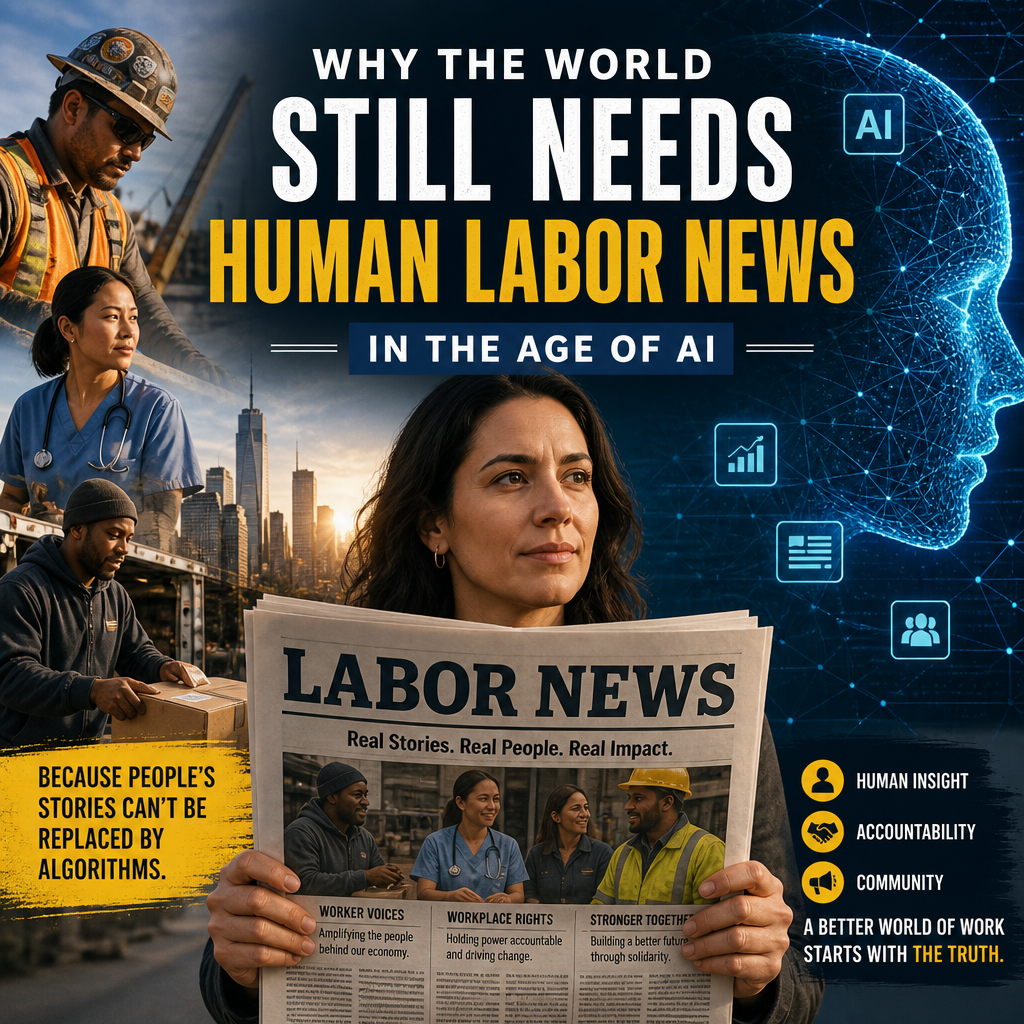
Why the World Still Needs Human Labor News in the Age of AI
Why the World Still Needs Human Labor News in the Age of AI
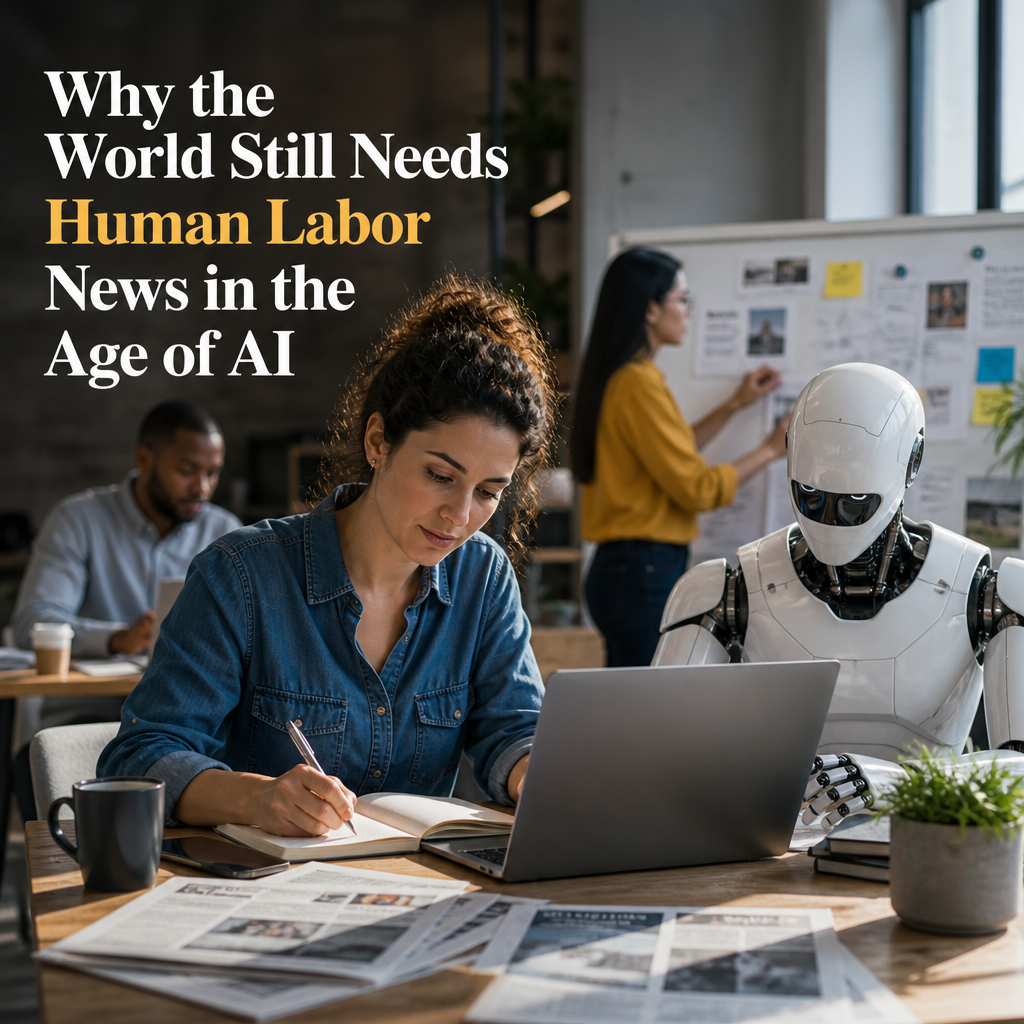
Artificial intelligence is transforming how people work. Algorithms now write reports, analyze markets, schedule shifts, screen applications, and automate tasks that once required entire teams. As these changes accelerate, reliable labor news is more important than ever.
Technology may reshape the workplace, but it cannot fully explain what those changes mean for workers, families, communities, and society. That responsibility still requires careful reporting, human judgment, and attention to lived experience.

AI Can Process Data, but It Cannot Replace Context
Artificial intelligence can quickly identify patterns in employment data. It can track wage changes, summarize corporate announcements, and compare job numbers across industries. These abilities make AI a powerful tool for journalists and researchers.
However, data alone rarely tells the whole story.

A statistic showing rising employment might hide the growth of temporary or poorly paid work. A company announcing “efficiency improvements” might actually be reducing staff, increasing workloads, or weakening job security. An AI-generated summary may repeat official language without questioning who benefits and who bears the cost.
Human labor reporting adds context by asking deeper questions:

- What is happening to workers behind the numbers?
- Are new jobs stable, safe, and fairly paid?
- How are automation and restructuring affecting different communities?
- Which voices are missing from the public conversation?
These questions require empathy, skepticism, and investigation—qualities that cannot be guaranteed by automated systems.
Workers Need More Than Corporate Announcements
Much of the public information about AI and employment comes from technology companies, executives, and policymakers. Their announcements often focus on productivity, innovation, and economic growth. Those outcomes may be real, but they are only part of the picture.
Workers experience workplace change directly. They know when performance targets become unrealistic, when monitoring software creates constant pressure, or when automation removes opportunities for training and advancement. Their experiences can reveal consequences that do not appear in press releases or financial reports.
Human labor news gives workers a platform to describe these realities. It can document workplace organizing, disputes over pay, changes in benefits, and concerns about surveillance or job displacement. This reporting helps the public understand how broad economic trends affect everyday life.
Independent Reporting Supports Accountability
Labor journalism also plays an important role in holding powerful institutions accountable. Employers, technology providers, and governments all have incentives to present workplace changes in favorable terms. Independent reporters can examine those claims and test them against evidence.
For example, careful reporting may investigate whether:
- An automated hiring system disadvantages certain applicants
- A company’s productivity gains come from unpaid or intensified labor
- Workers were properly consulted before new technology was introduced
- Public funds are supporting automation without protecting affected employees
- New regulations actually improve workplace rights
Without independent scrutiny, important decisions may be made behind closed doors. Human labor news helps ensure that technological progress is not treated as an excuse to ignore fairness, safety, or democratic oversight.
AI Also Creates New Reporting Challenges
The rise of AI makes labor journalism more difficult as well as more necessary. Automated content can flood the internet with low-quality articles, recycled claims, and misleading summaries. Search systems may prioritize speed over accuracy, while synthetic media can make it harder to distinguish authentic evidence from fabricated material.
Human journalists must therefore verify sources, investigate documents, speak with workers, and explain uncertainty clearly. They must also disclose how AI tools are used in reporting and avoid presenting generated material as firsthand knowledge.
Trust depends on this transparency. Readers need to know that labor news is based on evidence and responsible judgment rather than an unchecked stream of automated text.
A Human-Centered Future of Work
The future of work should not be measured only by how much technology can automate. It should also be judged by whether people have meaningful opportunities, fair compensation, safe conditions, and a voice in decisions that affect them.
Human labor news keeps these priorities visible. It connects policy debates with personal stories and economic trends with community consequences. It reminds readers that workers are not simply costs, inputs, or data points. They are people whose knowledge and dignity matter.
AI will continue to influence employment, but it should not control the public narrative about work. That narrative needs reporting grounded in evidence, independence, and human experience.
In the age of AI, the value of labor news is not disappearing. It is becoming essential.