
Forced and Underage Marriage in Afghanistan: A Growing Concern for Girls’ Futures
Introduction
Child marriage remains a serious concern in Afghanistan, where poverty, limited educational opportunities, and social pressures can force girls into marriage before they are physically and emotionally ready. For many girls, early marriage means losing their childhood, leaving education behind, and facing an uncertain future.

According to UNICEF Afghanistan, data from the 2022–2023 Multiple Indicator Cluster Survey show that 28.7% of women aged 20–24 were married before the age of 18. In some parts of Afghanistan, the figure reached one in two girls. These findings highlight the continuing need to protect children from early marriage and ensure that girls can make decisions about their futures.
Poverty and Lack of Education Increase the Risks

Economic hardship is one of the factors that can contribute to child marriage in Afghanistan. Families struggling to meet basic needs may feel pressured to arrange marriages for their daughters at an early age. Social expectations and traditional practices can also influence these decisions.
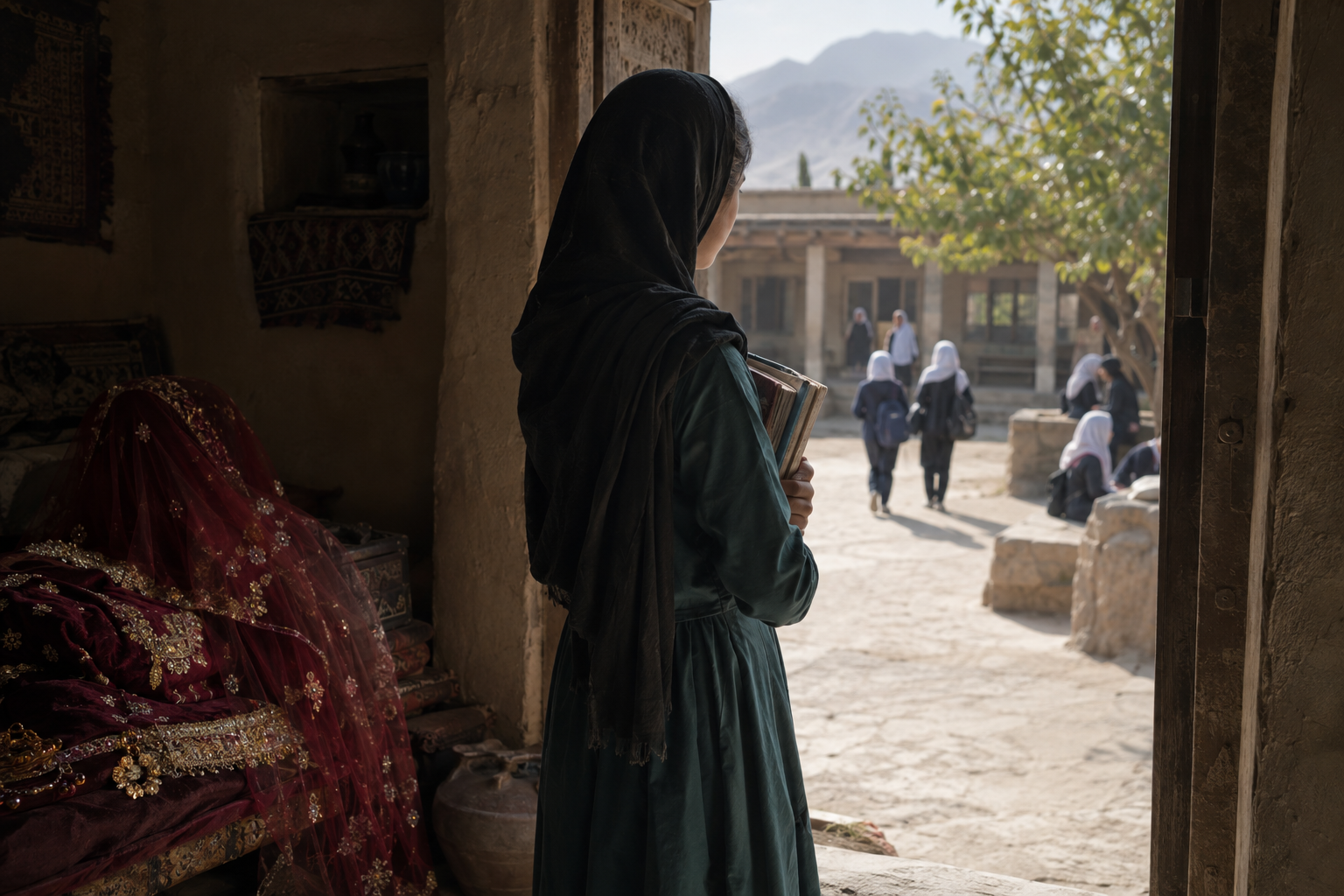
The restrictions on girls’ education have made the situation more concerning. Many Afghan girls cannot continue their education beyond the primary level, limiting their opportunities to develop skills, pursue careers, and build independent futures.

UNICEF has warned that girls who are out of school face a greater risk of child marriage and exploitation. Access to education is therefore an important part of protecting girls and helping them make informed decisions about their lives.
The Consequences of Forced Marriage
Marriage before the age of 18 can have serious consequences for a girl’s health, education, and emotional well-being. Girls who marry early may face pressure to become mothers before they are physically or emotionally prepared.
Early marriage can also interrupt education, restrict future employment opportunities, and increase vulnerability to domestic violence and social isolation.
Forced marriage raises additional concerns because it takes away a girl’s ability to give free and full consent. Every girl should have the opportunity to express her wishes and participate in decisions that affect her life.
International Organizations Call for Greater Protection
International organizations continue to call for stronger measures to prevent child marriage and protect the rights of girls in Afghanistan.
On October 11, 2026, UNICEF Afghanistan renewed its call to end child marriage, emphasizing that every girl deserves the opportunity to learn, grow, remain safe, and shape her own future.
Protecting girls requires coordinated efforts, including access to education, support for families facing poverty, community awareness, and effective protection services for children at risk.
Conclusion
Forced and underage marriage remains an important child-protection concern in Afghanistan. Addressing the problem requires more than raising awareness; girls need access to education, protection from coercion, and opportunities to build secure futures.
Every girl deserves the right to grow up safely, continue her education, and have a voice in decisions about her life. Protecting girls from forced and underage marriage is essential to safeguarding their rights and strengthening the future of Afghan society.
Source: UNICEF Afghanistan, “End Child Marriage, Invest in Girls. Protect their Futures,” October 11, 2026.