
Zero Warning, 309 Wounded: The Missile Riyadh Never Saw Coming
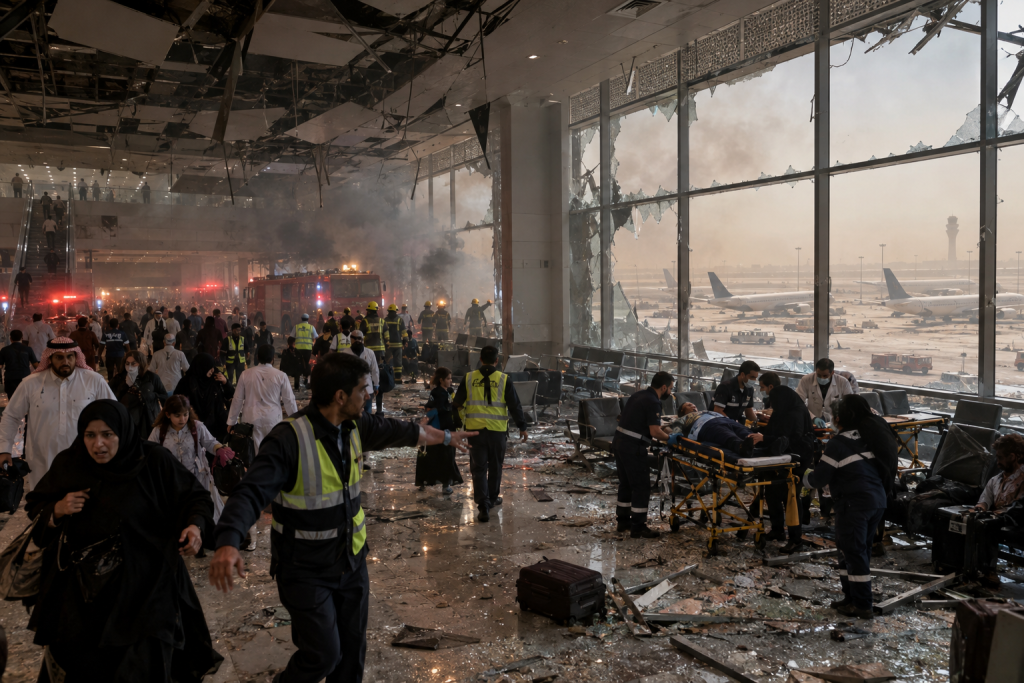
A missile strike on Riyadh’s King Khalid International Airport reportedly killed 12 people and wounded 309 others after hitting Terminal 3 on October 10, 2026. The attack triggered an evacuation, while Saudi air defenses and warning systems reportedly failed to detect or intercept the missile.
It was the third airport attack in a week, following strikes claimed by the Houthi movement. Hundreds of flights were cancelled or diverted, airlines suspended service, and international governments issued travel warnings. Saudi authorities and the United Nations condemned the attack.
Zero Warning, 309 Wounded: The Missile Riyadh Never Saw Coming
Saudi Arabia has confirmed that a missile strike on Riyadh’s King Khalid International Airport killed 12 people and wounded 309 others. The General Authority of Civil Aviation (GACA) said the dead included four Saudi citizens and residents of Bangladesh, the United States, Egypt, Jordan, Syria, Palestine, and Sudan. Some of the wounded remain in critical condition.

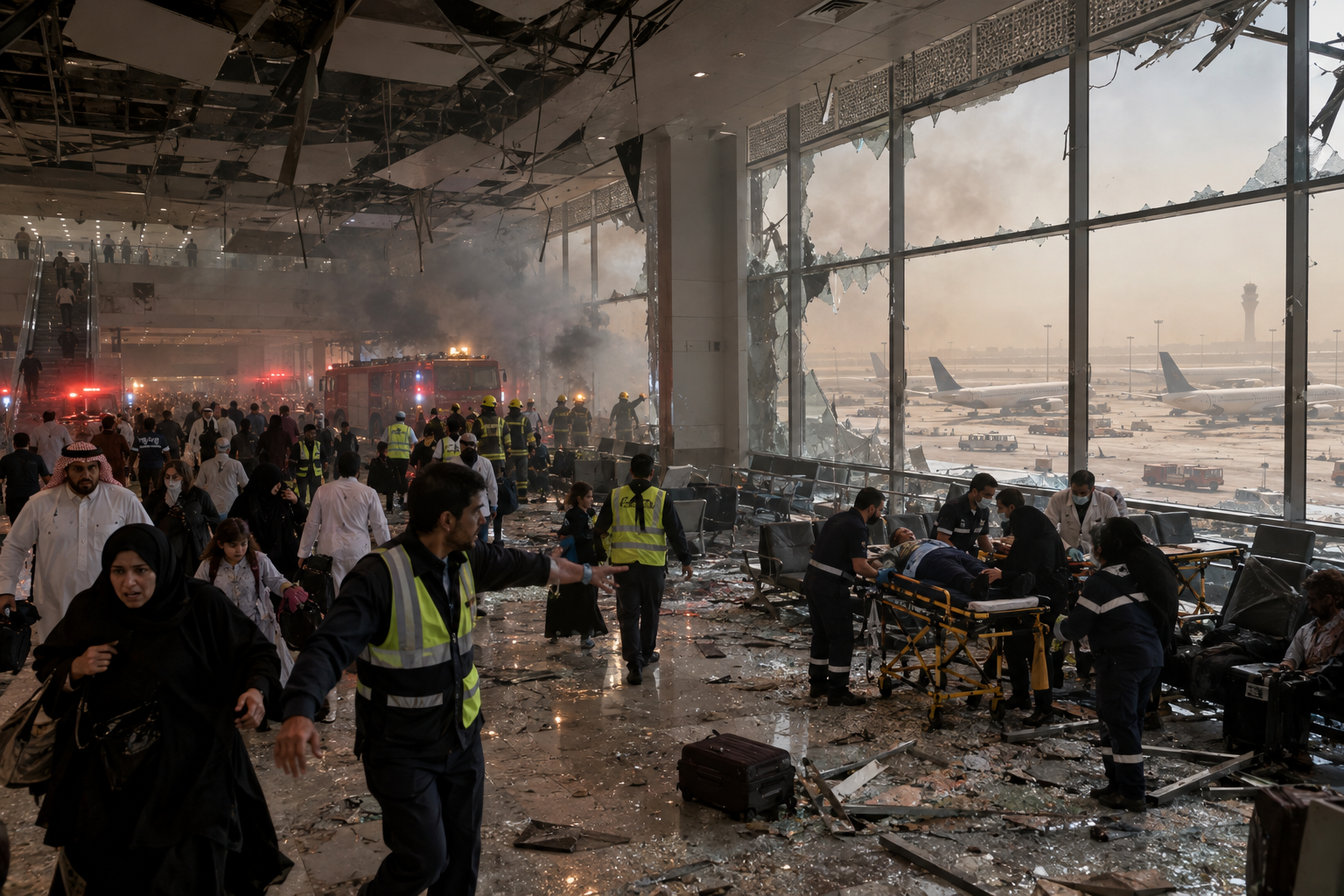
The attack occurred on Saturday, October 10, 2026, marking the deadliest strike on Saudi soil in recent months. According to the Saudi civil aviation authority, the missile directly hit Terminal 3, which handles domestic flights, triggering a full evacuation of the airport. Witnesses described scenes of panic inside the terminal. One passenger told AFP they saw people injured at the boarding gate and everyone running.
Crucially, the strike appears to have caught Saudi defenses completely off guard. Regional sources reported that no warning was issued by the kingdom’s threat alert system before impact, and air defense systems failed to intercept the incoming missile. This came despite Saudi Arabia operating one of the most advanced air defense networks in the region.

The attack is the third on King Khalid International Airport in a single week. Earlier strikes on October 6 and 7 had killed three people, including a Saudi pilot, and wounded at least 36 others. The Houthi movement in Yemen claimed responsibility for those earlier attacks, but has not officially claimed the October 10 strike as of publication. However, a Houthi military spokesman had previously warned that only pre-authorized humanitarian flights would be allowed to land at Riyadh airport.
The consequences were immediate. At least 225 flights were cancelled in the preceding 24 hours, according to FlightAware, and all inbound flights to Riyadh were diverted or cancelled. The United States, United Kingdom, Germany, Australia, and Canada all issued warnings urging citizens to avoid the airport. Airlines including Lufthansa and Air India suspended operations to Riyadh.

The Saudi-led coalition active in Yemen condemned the strike as a war crime in all respects and vowed a firm response. UN Secretary-General Antonio Guterres said he was deeply shocked, stating that attacks against civilians and civilian infrastructure are a violation of international law and must stop immediately.
Saudi Arabia has confirmed that a missile strike on Riyadh’s King Khalid International Airport killed 12 people and wounded 309 others. The General Authority of Civil Aviation (GACA) said the dead included four Saudi citizens and residents of Bangladesh, the United States, Egypt, Jordan, Syria, Palestine, and Sudan. Some of the wounded remain in critical condition.
The attack occurred on Saturday, October 10, 2026, marking the deadliest strike on Saudi soil in recent months. According to the Saudi civil aviation authority, the missile directly hit Terminal 3, which handles domestic flights, triggering a full evacuation of the airport. Witnesses described scenes of panic inside the terminal. One passenger told AFP they saw people injured at the boarding gate and everyone running.
Crucially, the strike appears to have caught Saudi defenses completely off guard. Regional sources reported that no warning was issued by the kingdom’s threat alert system before impact, and air defense systems failed to intercept the incoming missile. This came despite Saudi Arabia operating one of the most advanced air defense networks in the region.
The attack is the third on King Khalid International Airport in a single week. Earlier strikes on October 6 and 7 had killed three people, including a Saudi pilot, and wounded at least 36 others. The Houthi movement in Yemen claimed responsibility for those earlier attacks, but has not officially claimed the October 10 strike as of publication. However, a Houthi military spokesman had previously warned that only pre-authorized humanitarian flights would be allowed to land at Riyadh airport.
The consequences were immediate. At least 225 flights were cancelled in the preceding 24 hours, according to FlightAware, and all inbound flights to Riyadh were diverted or cancelled. The United States, United Kingdom, Germany, Australia, and Canada all issued warnings urging citizens to avoid the airport. Airlines including Lufthansa and Air India suspended operations to Riyadh.
The Saudi-led coalition active in Yemen condemned the strike as a war crime in all respects and vowed a firm response. UN Secretary-General Antonio Guterres said he was deeply shocked, stating that attacks against civilians and civilian infrastructure are a violation of international law and must stop immediately.