

AI Is Moving Into Senior Care — But Can It Really Replace Human Connection?
Inspiren, an AI senior-care technology company, raised $70 million in Series C funding, bringing its total funding to $225 million and valuation above $500 million. Its platform combines sensors, hardware and privacy-conscious monitoring to identify risks, alert staff and support faster responses in senior living communities.
The investment reflects growing interest in AI for addressing safety and staffing challenges, but the technology raises questions about privacy, trust and caregiver workload. AI may support monitoring and routine tasks, while human judgment, relationships, dignity and personal connection remain central to senior care.
Artificial intelligence is moving deeper into senior care, and investors are showing increasing confidence that AI can help make older adults safer while supporting caregivers. The latest signal comes from Inspiren, a company developing AI-powered technology for senior living communities, which has raised $70 million in a new Series C funding round.
The September 10 funding announcement puts Inspiren’s total funding at $225 million and gives the company a valuation above $500 million. NewView Capital led the round, with participation from several existing and new investors. The company says the new funding will help expand its physical AI platform, hardware ecosystem and commercial operations.

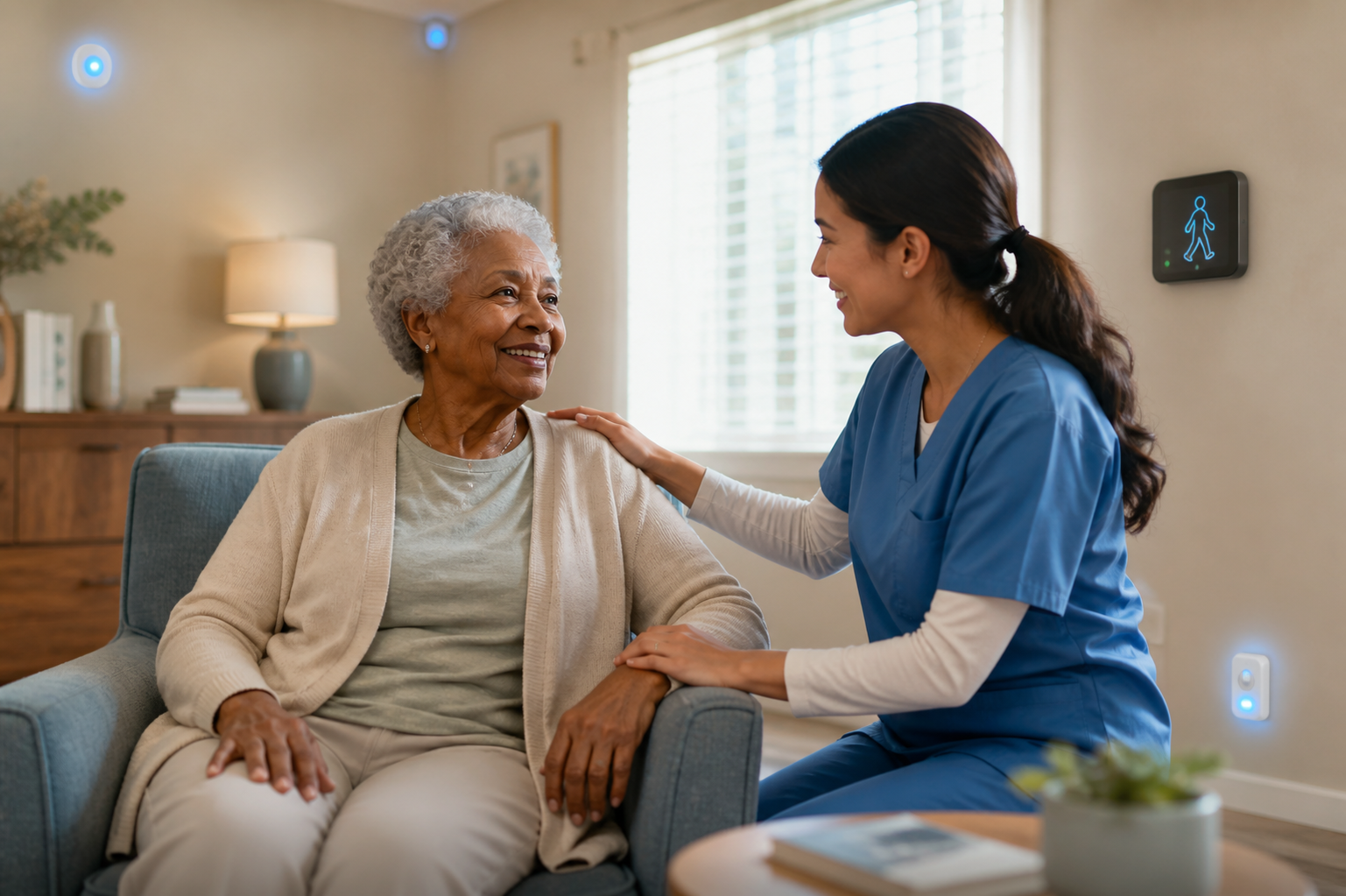
What makes the development particularly interesting is that Inspiren is not simply using AI to create another digital assistant. Its technology combines AI with sensors and other hardware designed to monitor senior living environments. Forbes reported that the company’s systems can identify potential problems, alert staff and support faster responses while using privacy-conscious approaches such as stick-figure imagery rather than conventional video.
This could become increasingly important as senior living communities face growing demands and staffing challenges. Forbes reported that Inspiren’s contracted revenue has surpassed $60 million, while subscription revenue has grown substantially. The company has also reported results including fewer falls, fewer injuries and reduced emergency-room visits at some senior living facilities.

But this is where the conversation about AI in senior care becomes more complicated. Better technology does not automatically mean better care. A sensor may detect that something is wrong, but it cannot replace the comfort of a family member, the judgment of a trained caregiver or the human connection that many older adults need.
The strongest future for AI in senior care may therefore not be about replacing people at all. Instead, AI could become an additional layer of support. It can help identify risks, organize information, provide alerts and give caregivers more time to focus on the person rather than constantly monitoring every possible problem.

There are also important questions about privacy and trust. Senior care involves some of the most personal parts of a person’s life, including health, movement and daily routines. Even when companies design systems to protect privacy, families and residents should understand what information is collected, how it is processed and who can access it.
The $70 million investment in Inspiren suggests that investors believe AI-powered senior care is becoming a major technology market. But the real test will not be how much money companies raise. It will be whether these technologies make seniors safer, help caregivers without creating new burdens and preserve the dignity and independence of older adults.
In my view, the best use of AI in senior care is not to create a world where technology replaces human relationships. It is to create a world where technology handles some of the monitoring and routine work so people can spend more time caring, listening and connecting.
SeniorAIx represents the broader opportunity behind this shift: using AI to help older adults and their families navigate everyday challenges while keeping human judgment and human connection at the center. The future of senior care may be increasingly intelligent, but it should never become less human.