
ZamZilla Is Building a New AI Business Ecosystem Across 200+ Industry Platforms
ZamZilla is developing an interconnected AI ecosystem spanning more than 200 industry-specific platforms across over 50 sectors. Its architecture combines a WordPress operating layer, application development tools and AI copilots intended to help businesses create, automate and manage digital products.
The platform also emphasizes integrations with CRM systems, payment services, voice APIs and other business applications. Its agentic approach is designed to coordinate workflows and actions across connected systems, reflecting a broader shift toward integrated enterprise AI infrastructure.
The AI industry is moving beyond individual chatbots and standalone applications, and ZamZilla is positioning itself around a different model: a connected ecosystem of industry-specific AI platforms designed to help businesses build, automate and operate through one broader technology infrastructure.
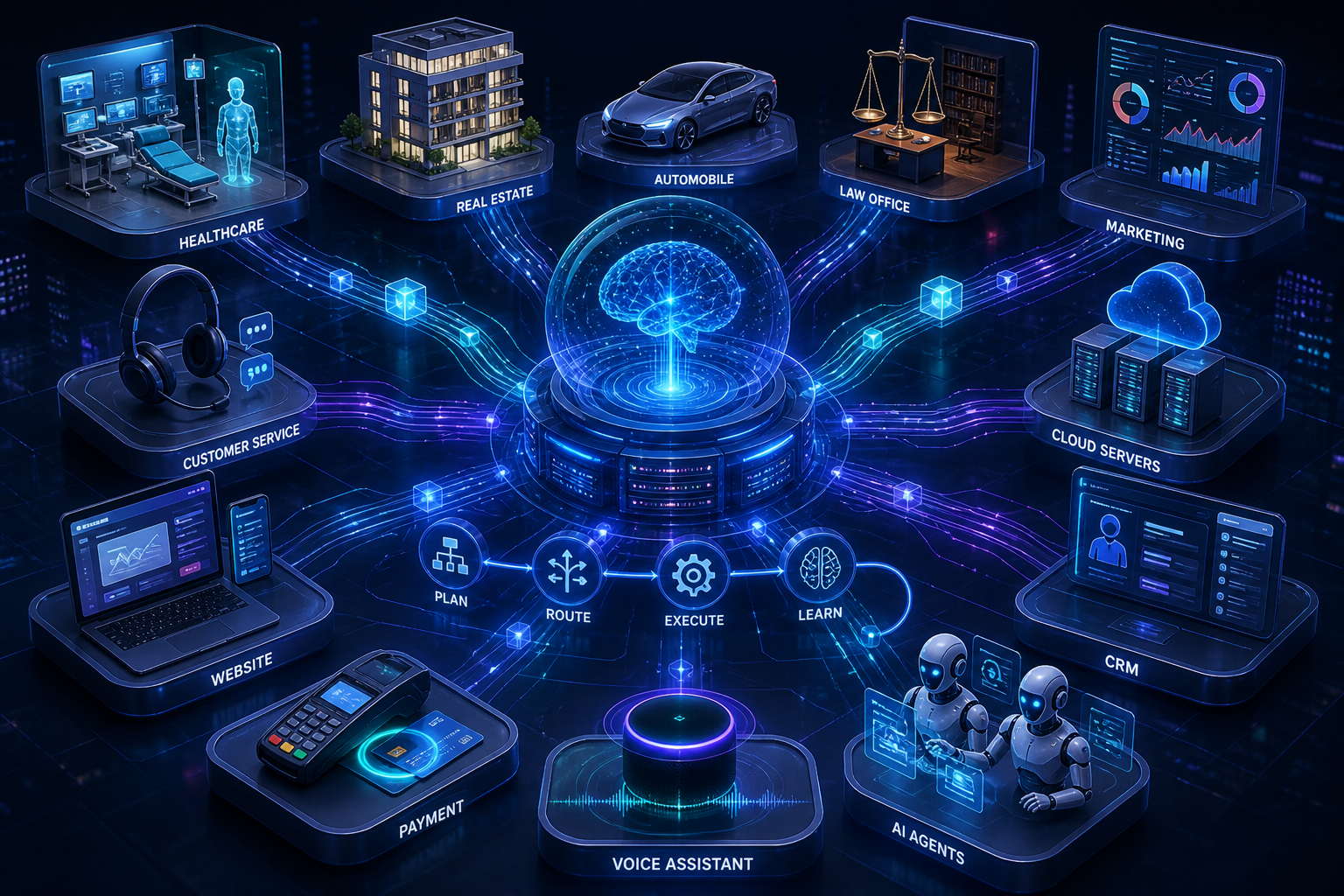
ZamZilla currently describes its ecosystem as spanning more than 200 vertical AI platforms across industries ranging from healthcare and real estate to marketing, automotive, legal services and customer support. Its broader platform architecture is designed to connect AI applications, cloud infrastructure and intelligent copilots rather than treating each tool as an isolated product.

At the center of that strategy is an agentic approach to business technology. Instead of simply generating information in response to a prompt, agentic systems are designed to plan tasks, coordinate workflows and take actions within defined environments.
ZamZilla says its infrastructure brings together three core capabilities: a WordPress operating layer, an application development environment and a copilot layer for deploying AI agents. The company says these components can work together to move an idea from a natural-language description toward a live digital product.

The strategy reflects a broader change taking place across business software. Companies have traditionally relied on separate systems for websites, customer relationship management, marketing, communication and operations. Increasingly, AI platforms are attempting to connect those functions so that information and workflows can move between systems more efficiently.
ZamZilla’s ecosystem also includes industry-specific platforms designed around particular business needs. The company says its network covers more than 50 industries, with applications intended to provide specialized AI capabilities rather than forcing every organization into the same generic software model.

The company is also emphasizing integrations. Its platform describes connections with WordPress, CRM systems, payment services, voice APIs and other business applications, allowing AI-driven workflows to operate across multiple parts of an organization.
This approach could become increasingly important as businesses experiment with AI agents. The competitive question is gradually shifting from whether a company has access to AI to whether its AI tools can actually become part of everyday business operations.
For ZamZilla, the ambition is to make that transition through an interconnected ecosystem rather than a single application. If the model succeeds, businesses could have access to specialized AI capabilities while still operating within a common technology infrastructure.
The development also illustrates where the next phase of enterprise AI may be heading: away from isolated AI features and toward connected systems that can coordinate websites, applications, data and intelligent agents.
As businesses continue looking for practical ways to adopt AI, the platforms that can combine capability, integration and ease of deployment may have an important role in defining the next generation of digital business infrastructure.