

A New Era of AI: Transforming Work, Learning, and Daily Life
A New Era of AI: Transforming Work, Learning, and Daily Life
Artificial intelligence is reshaping how people work, learn, communicate and run businesses worldwide. In this report for Ariana Global News, we examine practical developments in AI today, explain the technologies behind them in plain language, and consider both near-term effects and longer-term possibilities. The goal is to inform readers about real impacts—without exaggeration—and to highlight the need for responsible, human-centered design.
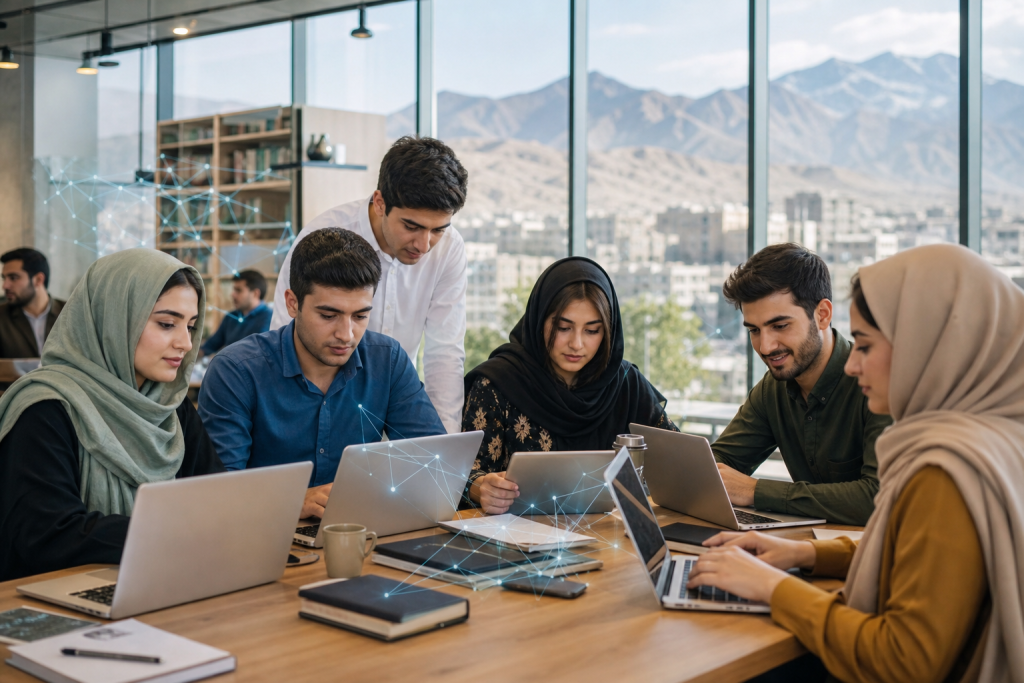
[IMAGE: Illustration of people using AI tools at work and school]

What’s changing now: practical AI breakthroughs
Over the past few years, several technological advances have moved from research labs into everyday use. Large language models that can draft text, computer vision systems that interpret images and video, and automation tools that execute repetitive tasks are among the most visible. These systems are being embedded in software for customer service, knowledge work, creative assistance, and data analysis.
How these tools are applied
- Work: AI helps summarize documents, automate routine data entry, and assist with scheduling and email management.
- Education: Adaptive learning platforms personalize practice problems and feedback, and automated grading speeds turnaround on assignments.
- Communication: Real-time transcription and translation make remote collaboration easier across languages and time zones.
- Everyday life: Recommendation systems, smart assistants, and AI-driven accessibility tools are becoming more common in consumer devices.
Teams organizing AI projects often use simple numeric tags to track experiments and releases—for example, identifiers like 368, 768, 769, 770 and 771 are the kind of reference numbers one might see in internal issue trackers or technical logs. These labels are useful for coordination but do not themselves indicate capabilities or outcomes.

[IMAGE: Close-up of a screen showing AI-assisted software]
Impact on work: augmentation, not just automation
AI’s biggest immediate effect in the workplace is augmentation—tools that extend human capabilities rather than replace them outright. For many professionals, AI can handle repetitive or time-consuming tasks so people can focus on judgment, creativity and relationship-building. For example, AI can draft a first version of a report, but a human still shapes the final message, verifies facts and applies ethical judgment.

Risks and adjustments
Adoption brings real challenges: job roles may shift, organizations must retrain employees, and managers need to redesign workflows. Companies and policymakers face choices about how to measure productivity, protect worker rights, and ensure fair transitions for affected employees.
[IMAGE: Workers in a hybrid office using collaboration tools]
Education and learning: personalization at scale
Edtech companies and school systems are piloting AI tools that tailor lessons to student needs, flag gaps in understanding, and provide practice with instant feedback. When responsibly deployed, these tools can help teachers spend more time on instruction and mentoring.
Limits to be aware of
Automated tutoring cannot replace the human aspects of teaching—motivating students, interpreting social cues, or addressing complex classroom dynamics. Evidence of effectiveness varies by context, and implementation requires teacher training, robust privacy protections, and careful evaluation.
Business and society: new efficiencies, new responsibilities
Companies use AI to detect fraud, optimize supply chains, and improve customer experiences. Public services are exploring AI for case triage, translation, and information delivery. These applications can increase efficiency, but they also raise questions about transparency, accountability and bias.
Responsible AI matters
To realize benefits while limiting harms, organizations need governance frameworks that include impact assessments, human oversight, and channels for contesting automated decisions. International collaboration and industry standards can help, but local context and legal protections remain essential.
[IMAGE: City street with mixed commercial and residential life enhanced by smart services]
Looking forward: realistic possibilities and prudent caution
Future advances may deepen AI’s role in research, climate modeling, healthcare diagnostics and creative production. Yet it is important to separate what is currently deployed from what is speculative. Policymakers, educators and business leaders should plan for gradual change—investing in skills, updating regulations, and supporting interdisciplinary research—rather than expecting instant transformation.
Principles for a human-centered approach
- Design systems with clear human oversight and the ability to appeal decisions.
- Prioritize transparency about capabilities and limits.
- Protect privacy and secure data used to train and operate AI systems.
- Invest in workforce transitions and inclusive access to benefits.
Artificial intelligence is already altering everyday tasks and organizational practices, and its influence will grow. For Ariana Global News readers around the world, the immediate takeaway is simple: these technologies present real opportunities and real trade-offs. Navigating them effectively will require public engagement, careful regulation, and a commitment to building AI that serves human needs.