

IAEA Reports Expansion of North Korea’s Nuclear Activities
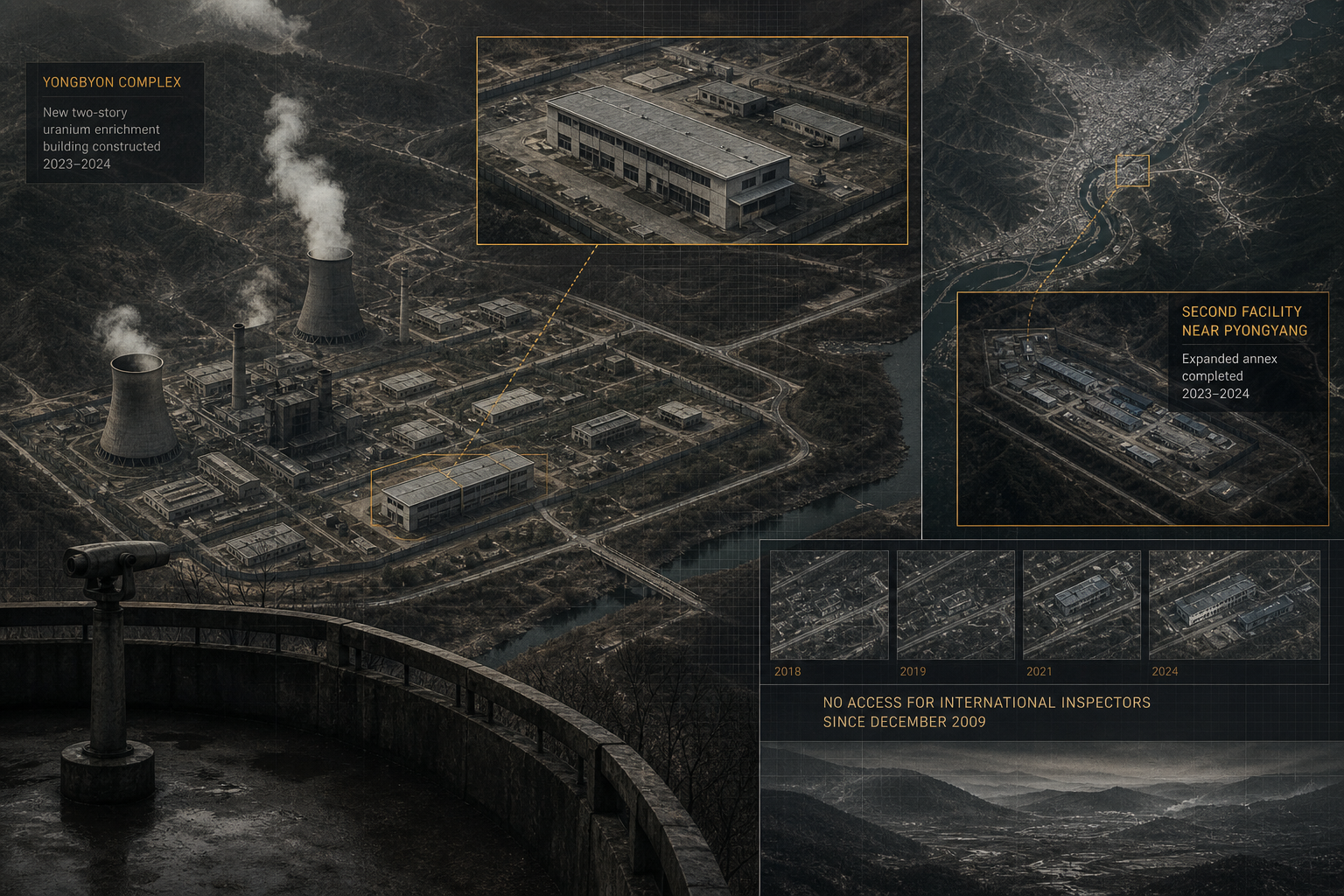
The IAEA reports that North Korea has built a new uranium enrichment facility at Yongbyon, potentially accommodating up to 28 centrifuge cascades. Satellite imagery and state media photographs also indicate expanded activity at the Kangson enrichment site near Pyongyang.
Because inspectors have lacked access since 2009, the IAEA cannot verify the facility’s centrifuge count, performance, or uranium output. The agency says the developments expand North Korea’s capacity to produce weapons-grade material and violate relevant UN Security Council resolutions.
The International Atomic Energy Agency (IAEA) has reported that North Korea continues to expand its nuclear infrastructure, raising fresh concerns over the country’s uranium enrichment activities.
According to a recent IAEA report, North Korea has constructed a new uranium enrichment facility at its main nuclear complex in Yongbyon. The facility is believed to be capable of accommodating up to 28 centrifuge cascades, based on satellite imagery and photographs released by North Korean state media.
The IAEA identified the new building by comparing satellite images with photographs taken during North Korean leader Kim Jong Un’s visit to the site in June. The two-story facility reportedly contains centrifuge equipment on both floors.
The agency also reported signs of expanded activity at the Kangson uranium enrichment site near Pyongyang. An annex constructed in 2024 appears to have begun operating in January this year, indicating that North Korea may be increasing its enrichment capacity at more than one location.

IAEA Director General Rafael Grossi has expressed serious concern over the continued operation and expansion of uranium enrichment facilities at Yongbyon and Kangson. The agency said the developments represent a continued expansion of North Korea’s capacity to produce weapons-grade nuclear material.
The IAEA noted that its inspectors have not had access to North Korea since 2009. As a result, the agency has relied primarily on satellite imagery, publicly available information and photographs released by North Korean authorities to monitor developments in the country’s nuclear programme.
The agency said it could not independently determine the exact number of centrifuges installed at the new Yongbyon facility, their operating performance or the amount of enriched uranium currently being produced.
North Korea has repeatedly rejected the IAEA’s authority and maintains that its nuclear status is irreversible. Pyongyang has also defended the development of its nuclear capabilities as a matter of national security.

The latest findings come amid continued international concerns over North Korea’s nuclear and missile programmes. The IAEA said the continued expansion of uranium enrichment facilities and the broader development of North Korea’s nuclear programme are in violation of relevant United Nations Security Council resolutions.
The new assessment is expected to increase international attention on North Korea’s nuclear activities and could further complicate efforts to address the country’s nuclear programme through diplomatic channels.