
Afghanistan Elections: What Happened, What Changed, and What Comes Next
A concise look at Afghanistan’s recent electoral history: the 2018–2019 votes, the 2021 collapse of electoral institutions, and the scenarios for future elections.
Afghanistan Elections: What Happened, What Changed, and What Comes Next
The question of elections in Afghanistan is both recent and rooted in decades of political upheaval. Since the country held national votes in 2018 and 2019, the landscape has changed dramatically — culminating in the Taliban’s return to power in August 2021. This article explains what happened to Afghanistan’s electoral process, how political life and institutions have shifted since then, and the realistic scenarios for what comes next.

What happened: the last elections and the collapse of the old order
Between 2004 and 2019 Afghanistan conducted a series of national elections under the post-2001 political framework. The most recent parliamentary vote took place in October 2018 and the last presidential election was held in 2019. Those contests were marred by logistical problems, low turnout in parts of the country, and allegations of fraud — problems that already reflected the fragility of institutions charged with running elections.
Everything changed in August 2021 when Taliban forces seized control of Kabul and the internationally backed Islamic Republic collapsed. The existing electoral bodies, such as the Independent Election Commission, ceased to operate effectively, and scheduled or anticipated electoral cycles were canceled or indefinitely postponed. Since the takeover, there have been no national elections under the new authorities.

What changed: institutions, participation, and rights
Institutional disruption
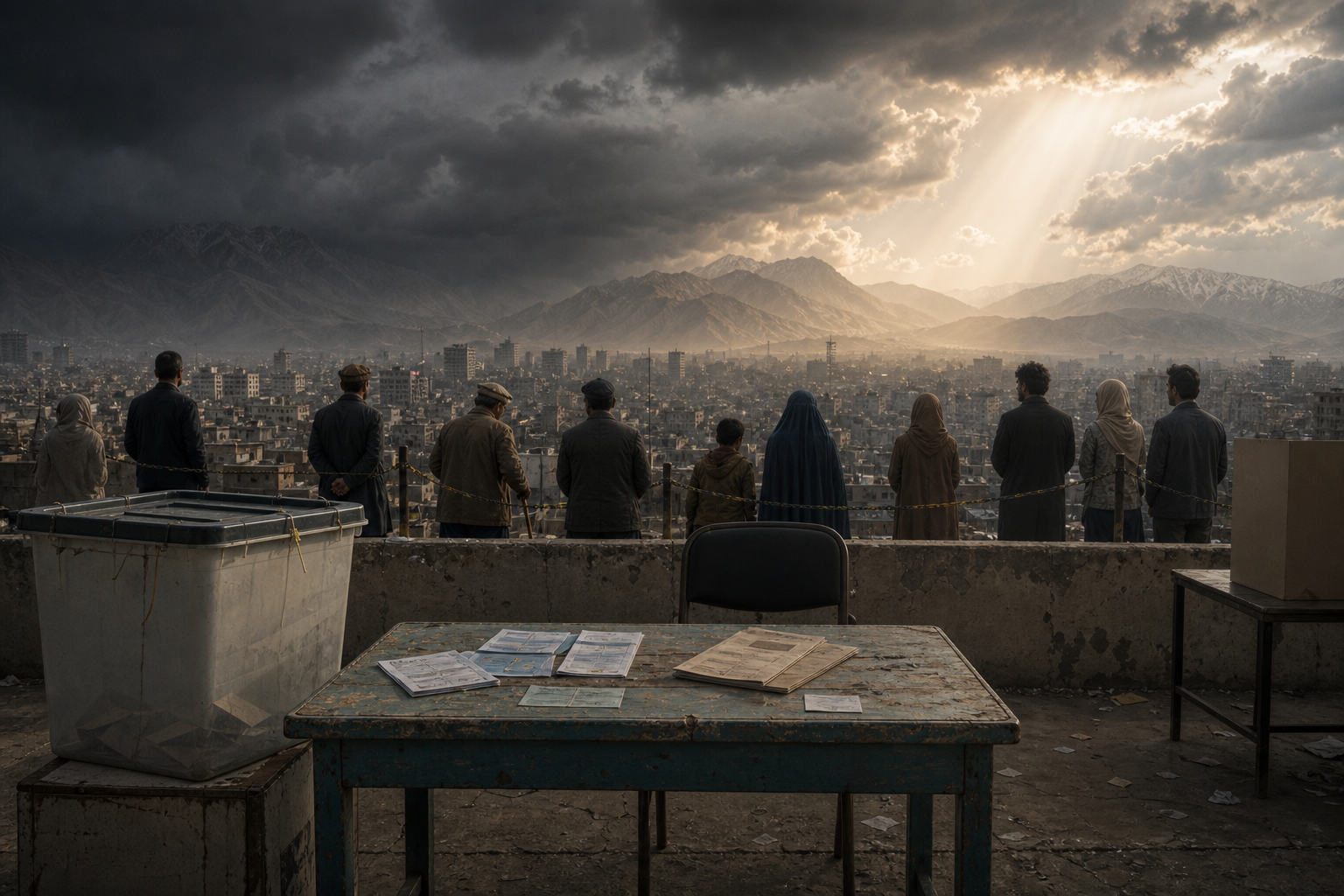
The most obvious change is institutional. Electoral commissions, voter registries, and the legal frameworks that governed voting have not functioned as they did before 2021. Without a recognized, independent election management body, large-scale, credible national voting cannot realistically take place.
Participation and representation
Under the previous system, millions of Afghans registered to vote and a range of political parties and candidates participated in public life. Since 2021, political pluralism has been severely curtailed. Many political figures, civil society leaders, journalists and activists have gone into exile or face restrictions, reducing the practical pool of participants who could take part in any open, competitive election.

Rights and the role of women
Perhaps the most consequential change on the ground is the dramatic restriction of rights — particularly for women and girls. Restrictions on women’s education, employment in many sectors, and public participation make it highly unlikely that any legitimate electoral process would meet international norms for inclusivity unless those restrictions are reversed.
What comes next: plausible scenarios and key requirements
No single outcome is guaranteed. Afghanistan’s future electoral path depends on politics inside the country, decisions by the Taliban leadership, and the positions of donor states and international institutions. Below are several plausible scenarios and the conditions that would affect them.
Scenario 1 — No national elections in the near term
This is the most likely short-term scenario: the authorities maintain control through appointments and administrative decrees rather than popular vote. Absent a reversal of policies that limit participation, and without an operational election commission, nationwide voting remains off the agenda.
Scenario 2 — Controlled, limited consultations
The ruling authorities could stage local or national consultations or advisory votes that fall short of full democratic elections. These might be used to claim internal legitimacy without offering an open, pluralistic contest. Such exercises would probably not satisfy international standards for free and fair elections.
Scenario 3 — Conditional roadmap to elections
Under intense international pressure or in exchange for recognition, the authorities might commit to a roadmap for future, broad-based elections. For a credible path to voting, several pillars would be necessary:
- Reconstitution of an independent election management body with technical support.
- Inclusive rules guaranteeing participation for women, minorities, and opposition figures.
- Security guarantees so voters and candidates can travel and campaign safely.
- Funding and technical assistance from international partners for voter registration, polling logistics, and observation.
- Clear timelines and legal frameworks accepted by a broad range of domestic stakeholders.
What to watch for in coming months
Key indicators that would signal a move toward elections include public statements from the authorities committing to a timetable, the reactivation or reshaping of an independent electoral body, visible restoration of civic freedoms (especially women’s participation), and offers of technical and financial assistance from international organizations. Equally important will be whether major donor countries and institutions set conditions — and whether the domestic political space allows for credible opposition and civil society involvement.
In short, the road back to elections in Afghanistan is uncertain and will be shaped as much by internal choices as by international diplomacy. For Afghans and observers around the world, the crucial questions are whether the basic prerequisites for free, inclusive voting — institutional independence, broad participation, and security — can be rebuilt, and how quickly that can happen.