

How Does Social Media Influence Young People?
Social media has become an important part of everyday life for many young people. Platforms such as Instagram, TikTok, YouTube, and Snapchat allow young people to communicate, share ideas, learn new skills, and stay connected with others around the world.
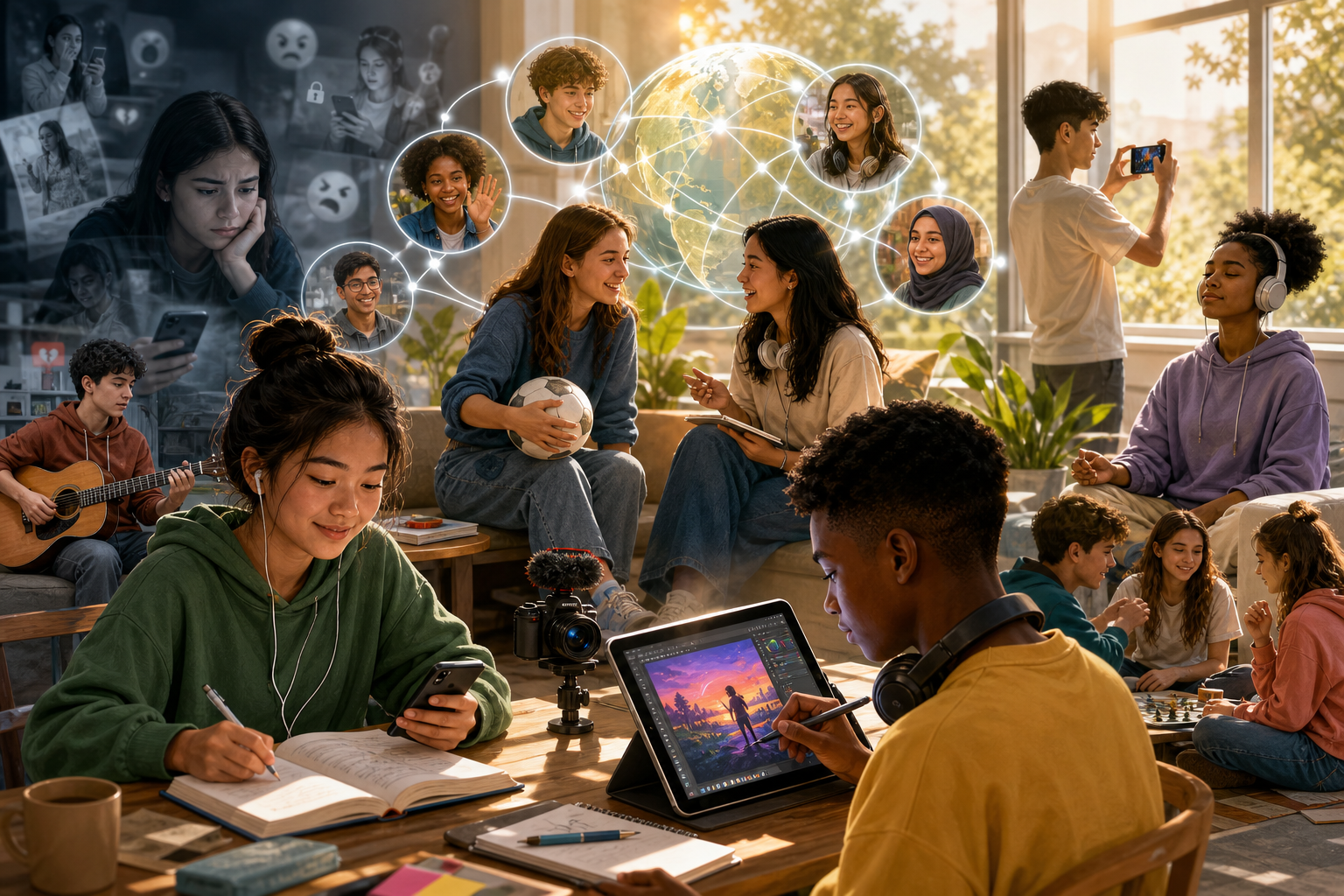
One of the positive effects of social media is that it can create new opportunities for learning and creativity. Young people can discover educational content, follow people with similar interests, share their own talents, and learn about different cultures and perspectives. Social media can also help young people build communication skills and connect with communities that support their interests.

However, social media can also create challenges. Spending too much time online may distract young people from school, family, hobbies, or other activities. They may also come across misinformation, negative comments, or unrealistic images that can affect how they view themselves and the world around them.
For these reasons, learning how to use social media responsibly is important. Young people can benefit from setting healthy boundaries, checking information before sharing it, protecting their privacy, and taking regular breaks from social media.

Overall, social media can have both positive and negative effects on young people. When used thoughtfully and responsibly, it can be a useful tool for learning, creativity, communication, and connection.
Social media influences young people by supporting communication, learning, creativity, cultural awareness, and connections with communities. Platforms such as Instagram, TikTok, YouTube, and Snapchat can help users develop skills and share their interests.
However, excessive use may affect school, relationships, and well-being, while misinformation, negative comments, and unrealistic images can create additional challenges. Healthy boundaries, privacy protection, media literacy, fact-checking, and regular breaks can promote responsible use.