
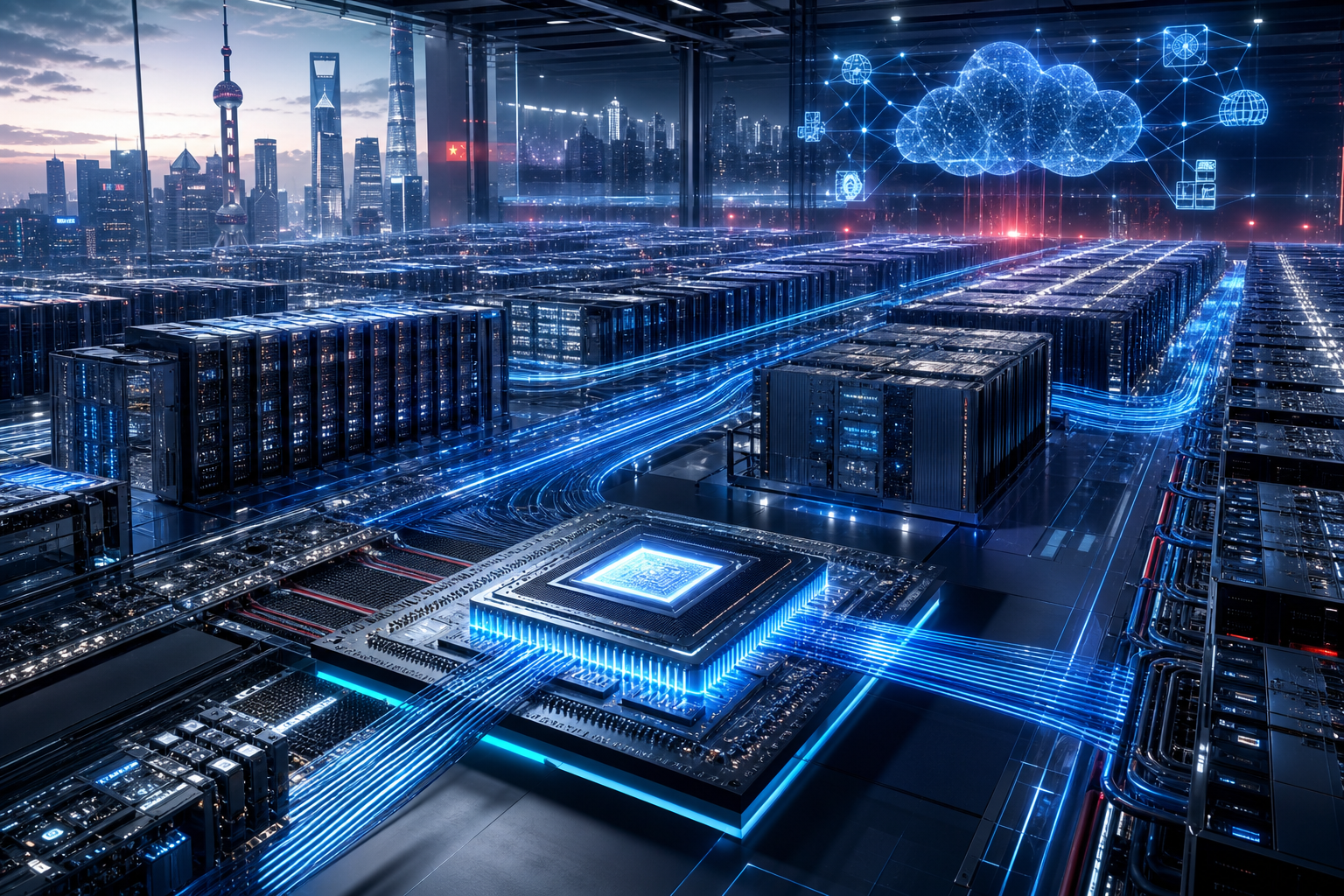
Huawei’s AI Chip Push Is About More Than Nvidia — It’s About Building a Different AI Future
Huawei is accelerating development of AI infrastructure in China, bringing forward two Ascend chips planned for 2027 and expanding technologies for connecting up to one million processors. It is also introducing storage and networking systems designed to support large-scale AI workloads and inference.
The effort reflects China’s push for a domestic alternative to Nvidia amid semiconductor export restrictions. Huawei aims to build an integrated technology stack for agentic AI, but faces challenges including limited access to advanced semiconductors and Nvidia’s stronger software ecosystem.
Huawei is accelerating its push into artificial intelligence infrastructure, announcing new AI chips and large-scale computing technologies as China seeks to strengthen its domestic alternative to Nvidia’s leading AI hardware ecosystem.
At Huawei Connect 2026 in Shanghai, the company said demand for its AI computing equipment in China is already exceeding its current production capacity. Huawei is now bringing forward plans for two next-generation chips: the Ascend 960DT, expected in the first quarter of 2027, and the Ascend 960PR, planned for the third quarter.

The announcement comes as restrictions on advanced semiconductor exports to China continue to shape the global AI hardware market. Huawei has increasingly become a central part of China’s effort to develop domestic computing infrastructure that is less dependent on foreign technology.
But Huawei’s strategy is not limited to making individual chips faster.

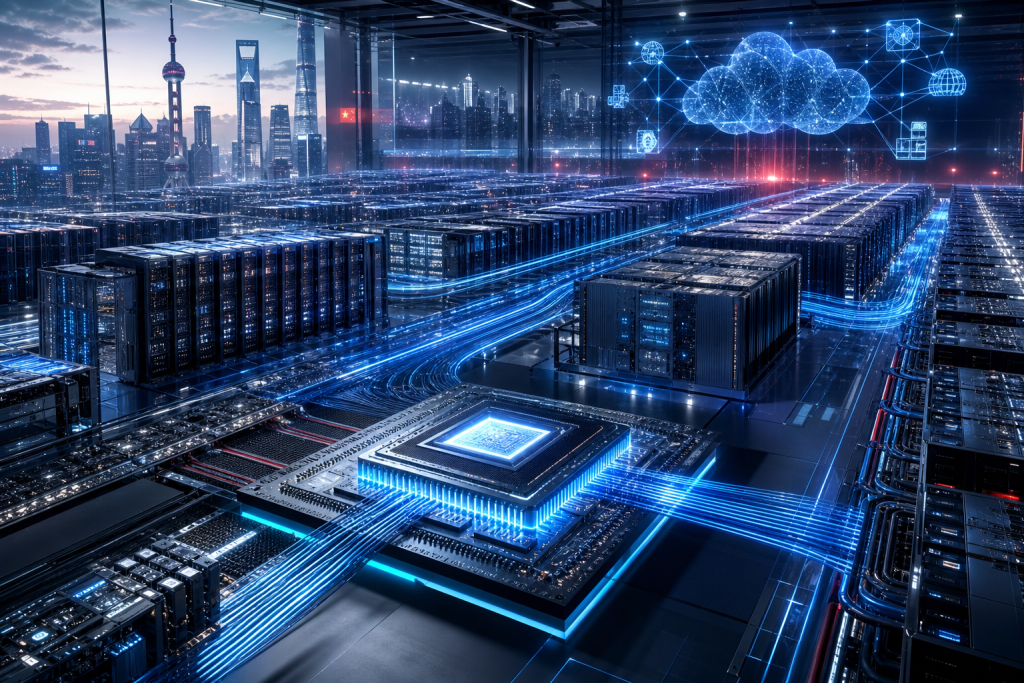
The company is developing technologies designed to connect very large numbers of processors into unified computing systems. Huawei says its next-generation architecture could link up to one million processors, allowing large AI workloads to be distributed across massive computing clusters.
That approach reflects a fundamental challenge in the AI industry. As models become larger and AI agents handle increasingly complex tasks, performance depends not only on individual accelerators but also on how efficiently thousands of processors, memory systems, networking technologies and storage can work together.

Huawei is also expanding the infrastructure surrounding its processors. The company has introduced OceanStor M900 Context Memory Storage, designed to provide large-scale memory resources for AI inference and improve the handling of the growing volumes of data generated during model execution.
The company is simultaneously positioning agentic AI as a major driver of future computing demand. In its latest Intelligent World 2035 research, Huawei describes agentic AI as a shift from systems that simply respond to prompts toward systems capable of perceiving situations, reasoning, planning, using tools and carrying out multi-step tasks.
Huawei has also projected that autonomous AI agents could eventually account for more than 90% of global AI processing traffic by 2035. That is a company forecast rather than an established industry outcome, but it illustrates the scale of computing demand Huawei expects from the agentic AI era.
The bigger competition, therefore, is moving beyond the question of which company produces the fastest AI chip.
Nvidia continues to benefit from a powerful software ecosystem built around CUDA, while Huawei is attempting to combine processors, networking, storage and large-scale computing systems into a more integrated domestic technology stack. Reuters reported that Huawei has already deployed more than 1,000 AI systems to more than 370 customers.
Huawei’s challenge is equally significant. Strong domestic demand does not automatically translate into global competitiveness. The company still faces restrictions on access to some advanced semiconductor technologies, while Nvidia retains a substantial advantage in software and developer adoption.
Still, the direction is clear.
China’s AI hardware strategy is increasingly focused on building an entire computing ecosystem rather than relying on a single breakthrough chip. Huawei’s latest announcements show how that strategy is evolving from individual processors toward interconnected systems, AI data-center infrastructure and technologies designed for the next generation of autonomous AI.
The result could be a more fragmented global AI hardware market, with competing technology stacks developing around different supply chains, software ecosystems and national industrial strategies.
For the AI industry, Huawei’s latest moves are another sign that the race for AI leadership is becoming a race not only for better models, but also for the computing infrastructure capable of powering them.