
Renewable Energy Revolution: How Clean Power Projects Are Reshaping the Future of the Grid
Meta Description: Discover how renewable energy projects, grid modernization, solar and wind power, and energy storage are transforming electricity systems and accelerating the global clean energy transition.
A New Era for the Power Grid
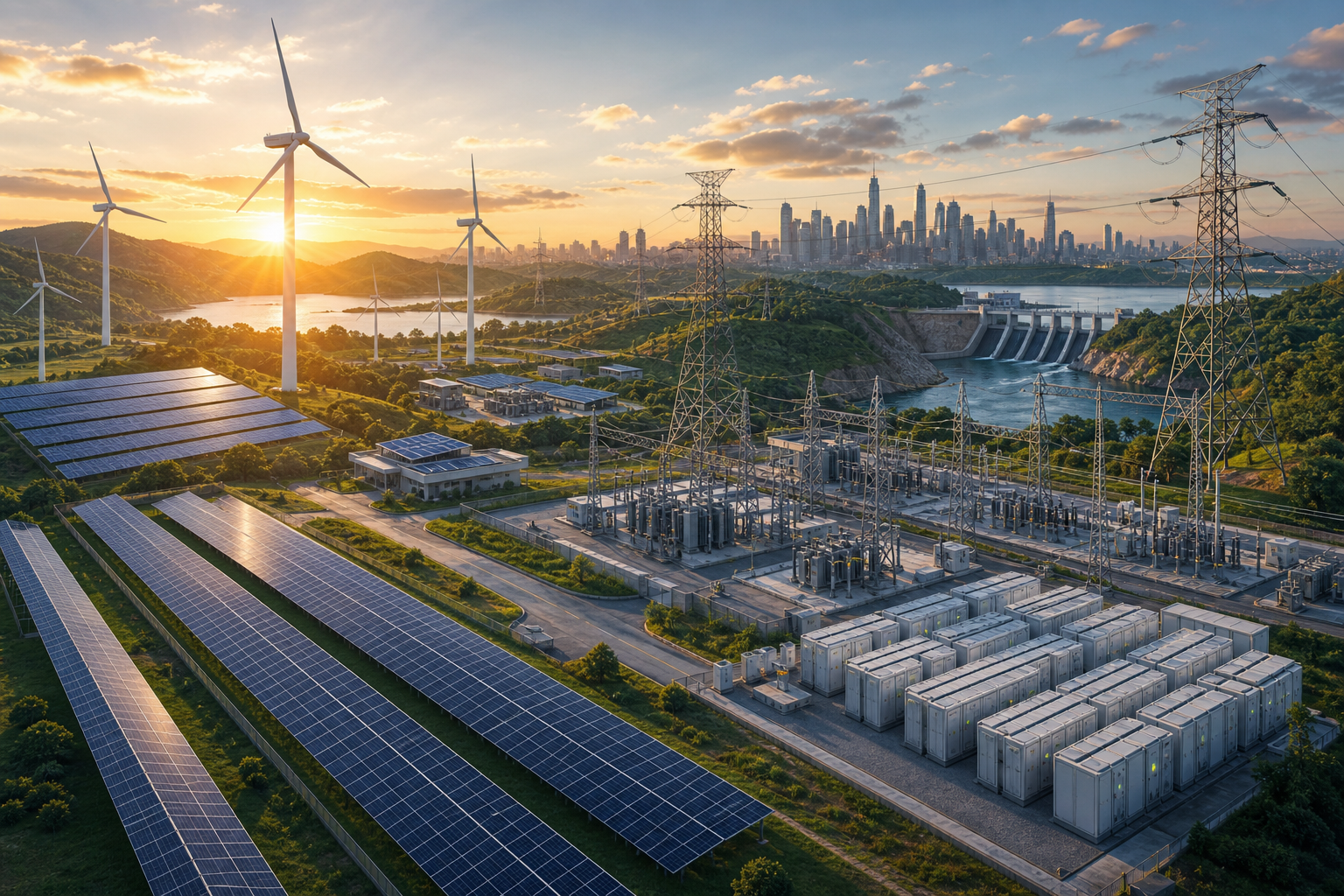
The global energy landscape is changing as renewable energy projects become an increasingly important part of electricity generation. Solar farms, wind projects, hydropower facilities, battery storage, and other clean-energy technologies are changing how electricity is produced, managed, and delivered.

This transformation is creating a new challenge: power grids must evolve to accommodate a more diverse and increasingly renewable energy system.
Why Renewable Energy Is Reshaping Electricity
Traditional electricity systems were largely designed around centralized power plants that generated electricity and delivered it through established transmission networks. Renewable energy introduces a different model.

Solar and wind resources can be developed across many locations, while rooftop solar and distributed energy systems can allow consumers to become electricity producers. This shift requires power networks to become more flexible and responsive.
As renewable projects expand, grid operators need better forecasting, transmission capacity, energy storage, and digital management systems.

The Growing Role of Energy Storage
Energy storage is becoming an important part of modern electricity systems. Solar generation can decline after sunset, while wind production can change according to weather conditions. Batteries and other storage technologies can help manage these fluctuations by storing electricity when supply is available and releasing it when demand increases.
Storage can therefore support grid reliability while enabling greater integration of variable renewable energy.
Modernizing the Grid
Building renewable generation is only one part of the energy transition. Modern transmission and distribution infrastructure is also essential.
Digital monitoring, smart-grid technologies, improved transmission lines, automated systems, and advanced forecasting can help electricity networks respond more effectively to changing supply and demand.
Grid modernization can also improve the ability of regions to connect new clean-energy projects and move electricity to areas where it is needed.
What the Energy Transition Means for the Future
The expansion of renewable energy is influencing investment, infrastructure planning, technology development, and electricity markets around the world. The transition will require coordination between governments, utilities, businesses, engineers, communities, and consumers.
The future grid is likely to be more connected, digitally managed, and diverse than traditional power systems. Renewable projects, energy storage, smart technologies, and upgraded transmission infrastructure will all play important roles.
As this transformation continues, the energy story is no longer simply about building new power plants. It is increasingly about creating a flexible and resilient electricity system capable of supporting changing energy needs while integrating growing amounts of clean power.