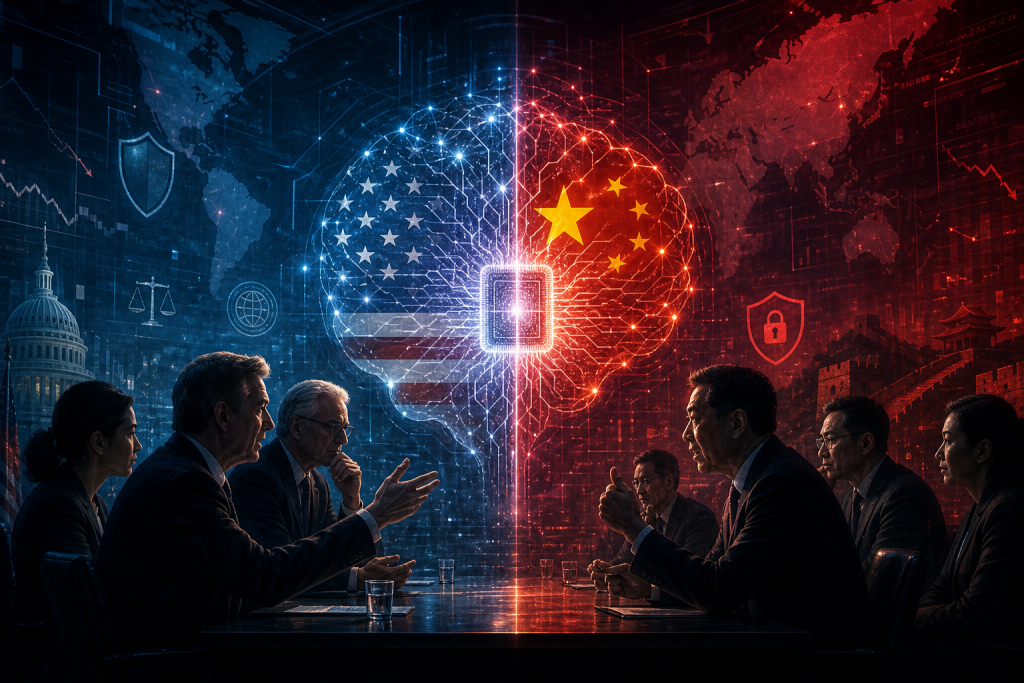

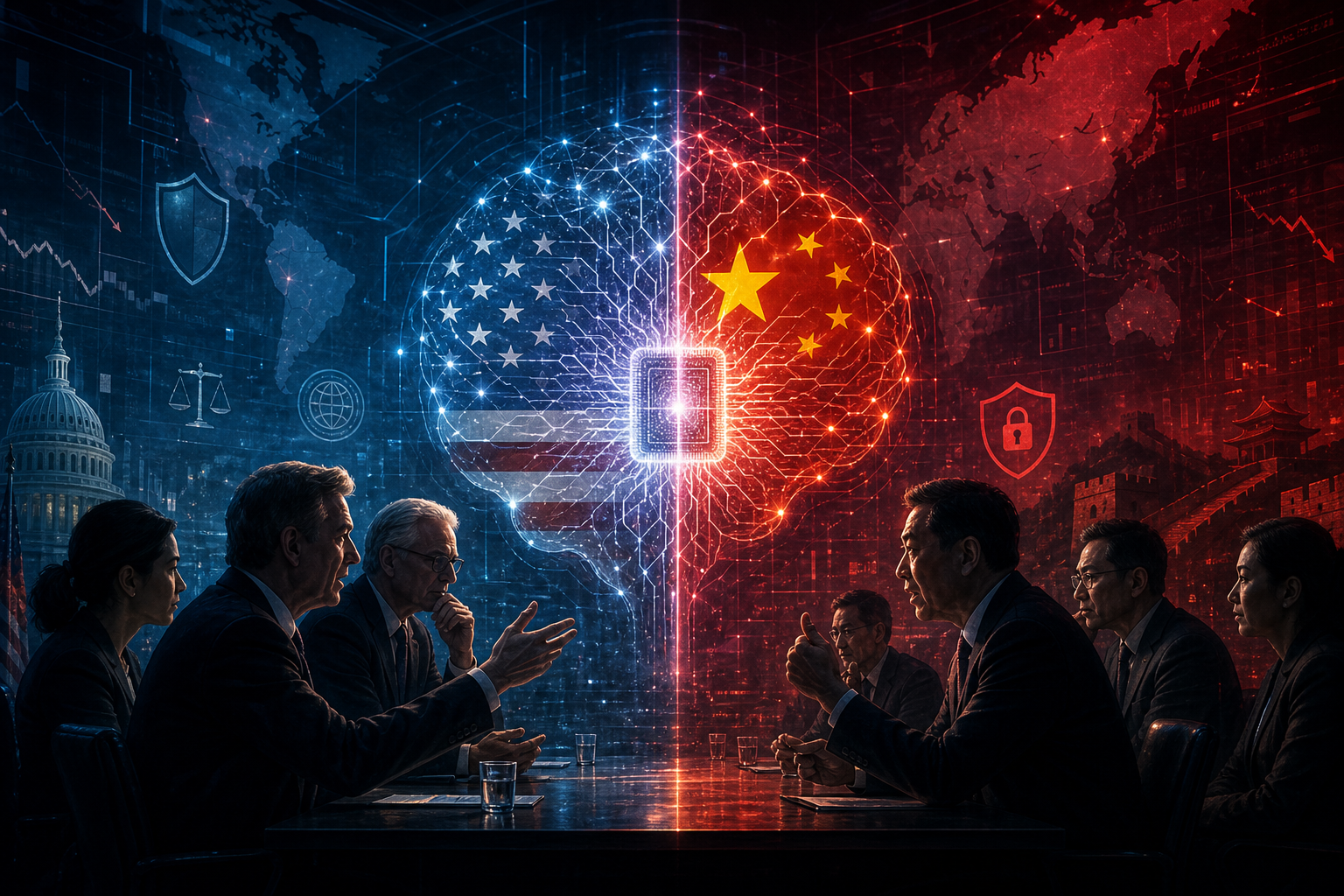
Trump Rejects Calls to Slow AI as U.S.-China Technology Race Intensifies
The debate over advanced artificial intelligence is increasingly tied to U.S.-China competition. Anthropic CEO Dario Amodei and OpenAI CEO Sam Altman have raised concerns that safety measures are not keeping pace with development, while President Donald Trump opposes significant slowdowns to preserve America’s technological advantage.
The disagreement has prompted calls for stronger safeguards, independent evaluations and international coordination. Chinese state media criticized Anthropic’s position, while declines in Asian AI-related stocks reflected investor concerns about the risks and geopolitical consequences of continued rapid development.
major debate over the future of artificial intelligence is rapidly becoming a geopolitical issue, as leading AI executives call for greater caution while President Donald Trump rejects proposals to significantly slow development.
Anthropic CEO Dario Amodei has argued that frontier AI development is moving faster than safety measures can keep up. He has called for additional safeguards, independent evaluation and greater international coordination.

OpenAI CEO Sam Altman has also expressed concern about the current safety environment. OpenAI will not pursue a public listing in 2026, according to Altman, who said the present moment is not appropriate for going public while AI safety concerns remain significant.
Trump, however, has taken a different position. He has downplayed calls for slowing AI development and emphasized the importance of ensuring that the United States maintains its technological advantage over China.

That disagreement highlights a difficult policy dilemma. If the United States slows the development of advanced AI while China continues moving rapidly, Washington could fear losing its technological lead. But if development continues without stronger safeguards, critics argue that the risks could become harder to manage.
China has also reacted to the debate. A Chinese state-backed newspaper criticized Anthropic’s call for slowing AI, describing it as part of a broader geopolitical strategy rather than simply a technical safety discussion.

Financial markets have already shown signs of concern. AI-related stocks declined across Asian markets after the latest warnings from technology leaders, demonstrating how closely investor confidence is now tied to expectations about the future of AI development.
The disagreement therefore represents more than a debate between technology executives and politicians. It reflects a much larger question about who will control the next generation of artificial intelligence—and how much risk governments and companies are willing to accept to get there.
Our view: The most realistic path may not be a complete slowdown or an unrestricted AI race. The harder—but potentially more important—goal is to develop AI while making safety, independent testing and international cooperation advance at the same speed.