

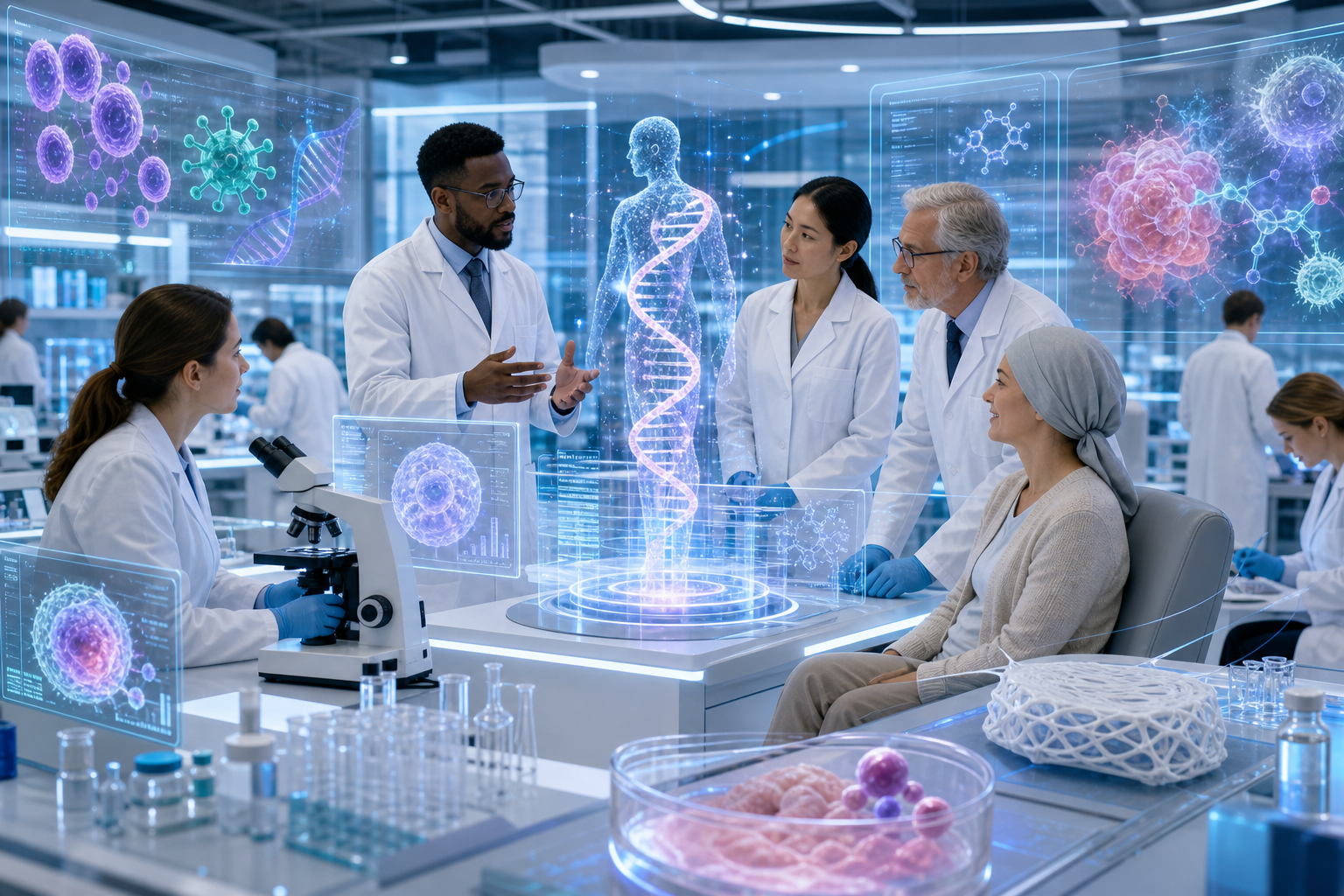
Revolutionizing Healthcare: The Latest Medical and Pharmaceutical Breakthroughs
The landscape of modern medicine is undergoing a profound transformation, driven by unprecedented convergence in artificial intelligence, genetic engineering, and pharmaceutical innovation.
Across laboratories and clinical settings worldwide, researchers are successfully shifting paradigms from generalized disease management to targeted, curative interventions. At the forefront of this movement is the clinical maturation of CRISPR gene-editing technology, which has officially transitioned from experimental theory to personalized patient application.

Scientists are now utilizing AI-powered copilots to design tailored genetic interventions in a fraction of traditional timeframes, offering renewed hope for patients with previously untreatable hereditary disorders. Concurrently, the pharmaceutical sector is reaping the expansive benefits of the mRNA revolution.
Initially fast-tracked by global health demands, mRNA platforms are now being meticulously adapted to target oncology. Personalized cancer vaccines, custom-built to recognize and neutralize the unique mutational profile of an individual’s tumor, are currently redefining standard oncological care. Furthermore, regulatory bodies are actively streamlining approval frameworks to accelerate the deployment of next-generation therapies, including once-weekly chronic treatments, novel oral formulations, and advanced regenerative medicine techniques.

Data analytics and real-time predictive modeling are simultaneously optimizing pharmaceutical supply chains and clinical trials, drastically reducing development overhead while boosting distribution efficacy. As regulatory agencies embrace computational modeling and reduce reliance on conventional animal testing, the pathway from benchside discovery to bedside delivery is becoming remarkably streamlined.
Ultimately, these interdisciplinary breakthroughs signify a monumental leap forward for global health, promising a future where customized medicine, regenerative tissue engineering, and rapid-response therapeutics are standard elements of clinical practice.