
Indonesia’s Ferry Disaster Raises New Questions About Maritime Safety
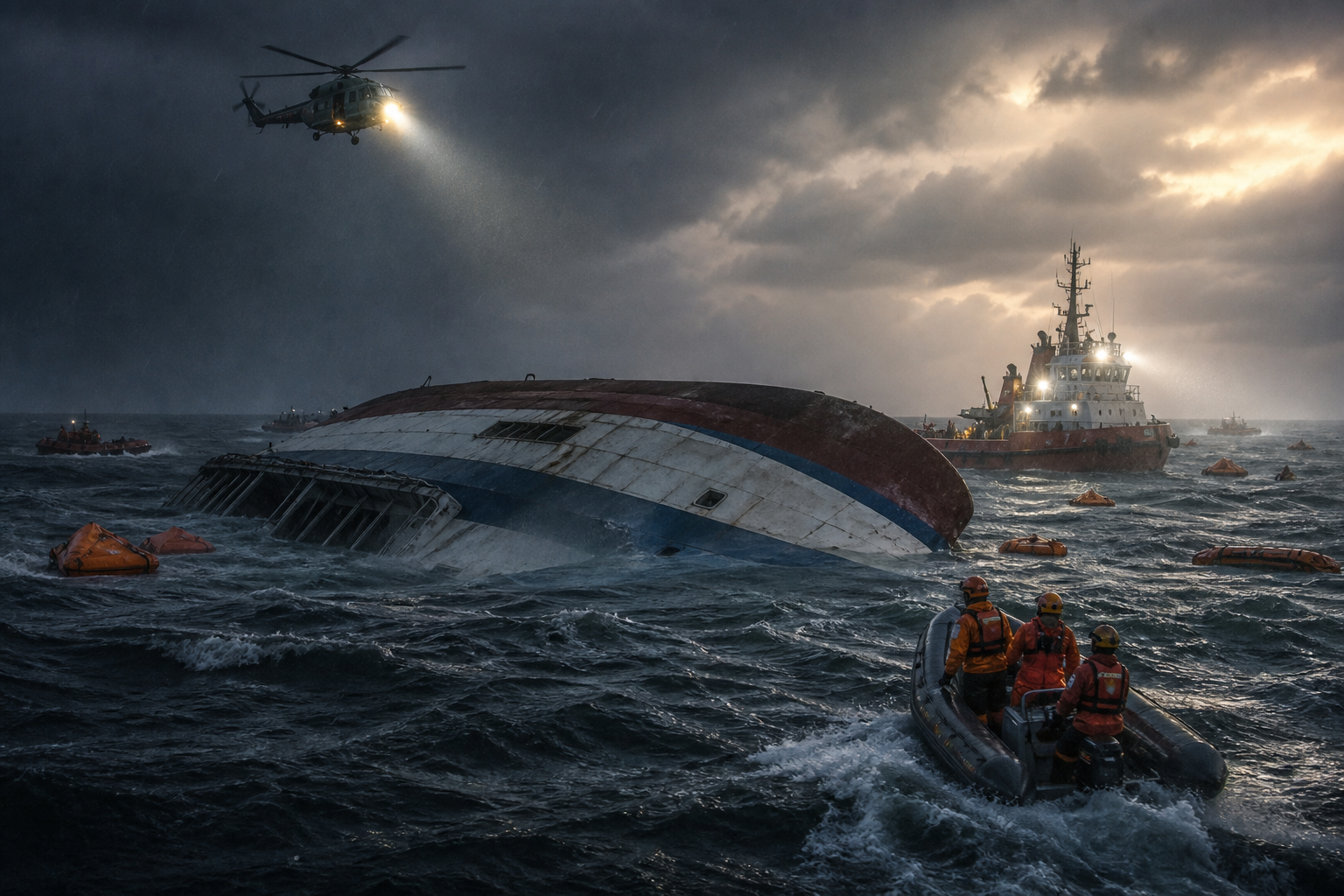
The passenger ferry Virgo Transport 8 overturned in the Java Sea while traveling from Surabaya to Banjarmasin, carrying 243 people. Authorities reported 107 survivors, six deaths and approximately 130 missing people as search-and-rescue teams continued operations in rough seas.
The disaster highlights Indonesia’s dependence on ferry transport and ongoing maritime safety challenges. Investigators will examine weather conditions, vessel monitoring, emergency communications and passenger protection to determine what happened and identify measures to prevent similar accidents.
A major maritime disaster in Indonesia has once again drawn attention to the safety challenges facing one of the world’s largest island nations. The passenger ferry Virgo Transport 8 overturned in the Java Sea on Sunday while traveling from Surabaya in East Java to Banjarmasin in South Kalimantan.
The vessel was carrying 243 people, including 213 passengers and 30 crew members.
Indonesian authorities said 107 people had been rescued and six bodies recovered, while about 130 people remained missing as search-and-rescue operations continued.
According to officials, the ship encountered rough weather before communication was lost. The captain had reported waves reaching several meters and indicated that the vessel was listing. Rescue teams later found evidence that the ferry had overturned.

The exact cause of the disaster remains under investigation.
Why Maritime Safety Matters
The disaster highlights a broader challenge for Indonesia. With thousands of islands and many communities depending on ferries for affordable transportation, maritime travel is an essential part of everyday life. For many passengers, sea transport is not simply a choice but a necessary connection between islands and major cities.
However, difficult weather conditions can quickly turn a routine journey into a dangerous situation. Rescue officials also reported that waves in the search area were making the operation extremely difficult, putting rescuers themselves at risk.

The incident raises important questions about how passenger vessels are monitored before and during dangerous weather, how quickly emergency information reaches rescue authorities, and whether ships have adequate systems for responding to sudden changes in sea conditions.
A Wider Safety Question
The tragedy should not be viewed only as an isolated accident. It also demonstrates why maritime safety requires continuous investment in vessel inspections, weather monitoring, emergency communication and passenger protection.
For Indonesia, where ferries remain an important part of national transportation, improving these systems could help reduce the human cost of future disasters. The investigation into the Virgo Transport 8 will be important not only for determining what happened to this vessel, but also for identifying lessons that could improve safety across the country’s ferry network.
As rescuers continue searching for the missing passengers and crew, the immediate priority remains saving lives. But once the emergency operation ends, authorities will face another responsibility: determining what went wrong and whether stronger safety measures could prevent a similar tragedy in the future.