
Inside the Taliban’s Intelligence Network: How the GDI Controls Afghanistan
The General Directorate of Intelligence (GDI) is the Taliban authorities’ primary intelligence and security agency. Since 2021, it has gathered information on security threats and investigated opposition, while also becoming central to monitoring criticism and controlling independent media.
Human Rights Watch has reported surveillance, censorship, arbitrary detention, intimidation and alleged torture involving journalists, activists, former officials and perceived Taliban critics. The GDI’s expanding role raises concerns about balancing security operations with freedom of expression, due process and basic rights.
The General Directorate of Intelligence, known as the GDI, is the main intelligence agency operated by the Taliban authorities in Afghanistan. Since the Taliban returned to power in August 2021, the agency has become an important part of the country’s security and internal-control system.
The GDI is officially responsible for intelligence and security activities, including gathering information about security threats, investigating suspected militant activity and protecting the authorities from armed opposition. However, human rights organizations have repeatedly raised concerns about the agency’s treatment of journalists, activists, former government officials and people perceived as critics of the Taliban.

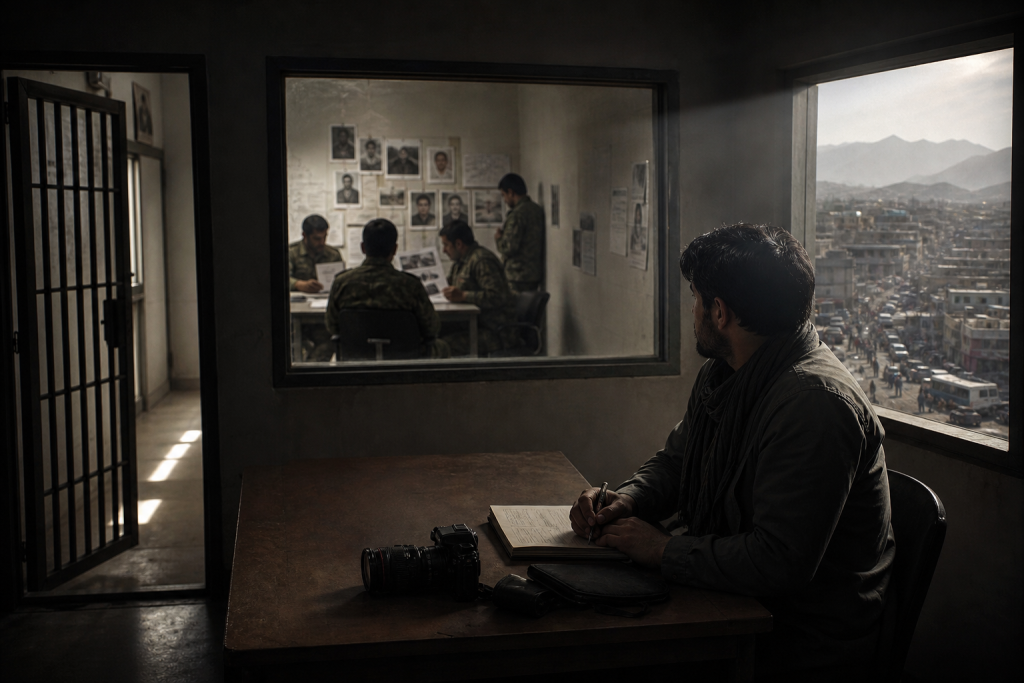
Human Rights Watch has reported that Taliban authorities have used surveillance, censorship, arbitrary detention and intimidation to restrict independent media. Its reporting identifies the GDI and the Ministry for the Propagation of Virtue and Prevention of Vice as major institutions involved in monitoring media outlets and dealing with journalists accused of violating Taliban rules.
For journalists, the consequences can be serious. Human Rights Watch has documented cases in which media workers were detained after being accused of cooperating with opposition groups or Afghan media outlets operating from abroad. Some journalists interviewed by the organization described beatings, torture and pressure to stop working in journalism after their release.

The concerns surrounding the GDI extend beyond the media. Human Rights Watch says journalists, activists and people perceived as critics of the Taliban have faced intimidation, arbitrary arrest, detention and torture during the five years of Taliban rule.
Recent cases have kept attention on the Taliban’s security apparatus. In August 2026, Human Rights Watch reported that six staff members of the Women and Children Legal Research Foundation had been detained in Kabul for nearly a month, with their families saying that Taliban authorities had not provided information about their whereabouts or the charges against them.
The role of the GDI therefore goes beyond traditional intelligence gathering. Its activities have become closely connected to the Taliban’s broader system of internal security and control, particularly when authorities seek to monitor criticism or prevent information from reaching the public.
At the same time, Afghanistan’s security situation remains complicated. The Taliban face threats from armed opposition groups and Islamic State Khorasan, meaning intelligence operations are an important part of the country’s security structure. The central question, however, is how such powers are exercised and whether people accused of security violations receive basic legal protections.
For many Afghans, the GDI represents one of the most powerful institutions operating behind the country’s security system. Its growing role also raises a wider question: how can Afghanistan maintain security while protecting freedom of expression, due process and the basic rights of its citizens?
As Afghanistan enters another year under Taliban rule, the activities of its intelligence apparatus will remain closely watched by journalists, human rights organizations and the international community.